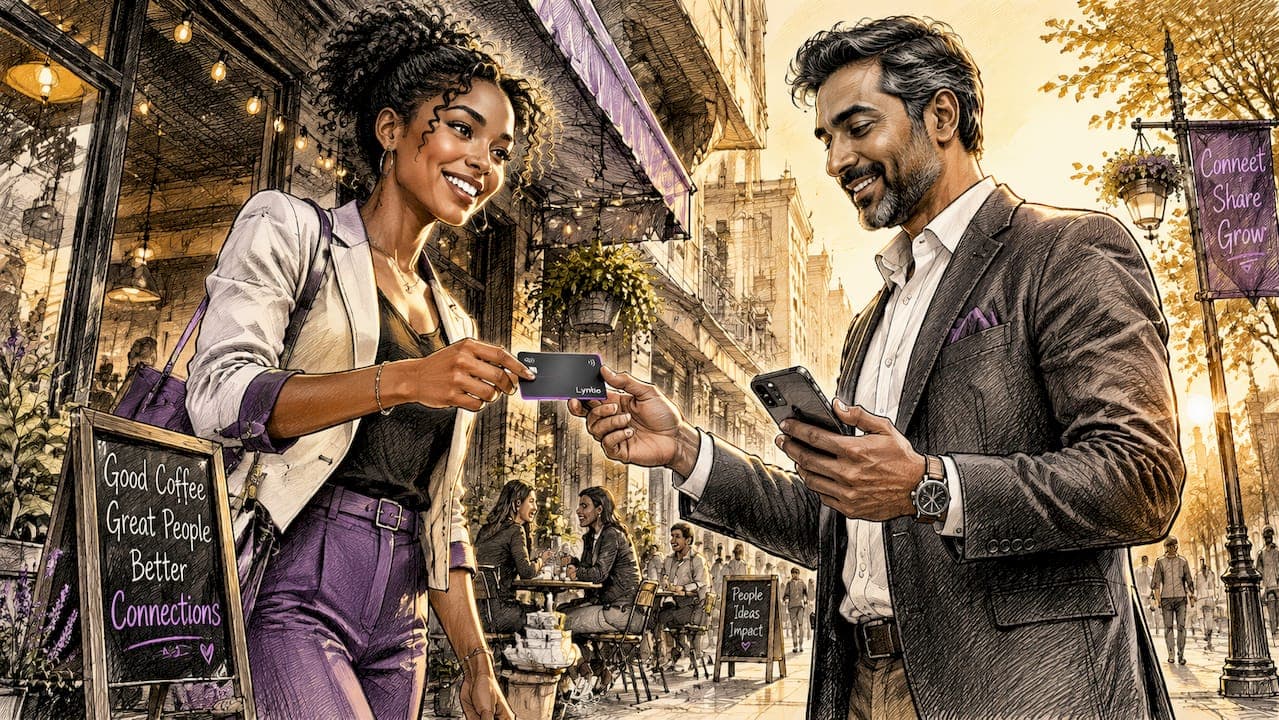
Contactless business cards are physical cards embedded with NFC (Near Field Communication) technology that transfer your professional profile to any smartphone with a single tap. They solve the core problem every professional faces: paper cards become outdated the moment your details change, and most end up in a bin within a week. The benefits of contactless business cards go far beyond convenience. They cut waste, reduce long-term costs, and give you live analytics that paper never could. This article covers every major advantage, from the technical standards that make them reliable to the branding features that make them worth the switch.
1. How contactless business cards improve networking efficiency
The single biggest advantage of NFC business cards is speed. You tap your card to a recipient's phone and your profile appears instantly, with no typing, no spelling errors, and no fumbling for a pen. That interaction takes under two seconds at a trade show or client meeting.
NFC cards use the NDEF format, which triggers native browser or contact import features on the recipient's phone. The recipient needs no custom app installed. That removes the single biggest friction point in digital contact sharing.
- Your contact details land directly in the recipient's phone contacts or browser.
- You never run out of cards at an event.
- A single card works across every meeting, indefinitely.
- You update your details once online, and every future tap reflects the change.
Digital contact details can be updated instantly through a static link or QR code without reprinting anything. That alone eliminates the most common reason professionals reorder paper cards.
Pro Tip: At conferences, hold your NFC card near the top third of a recipient's phone. Most Android NFC antennas sit there, and iPhones read best at the top edge.
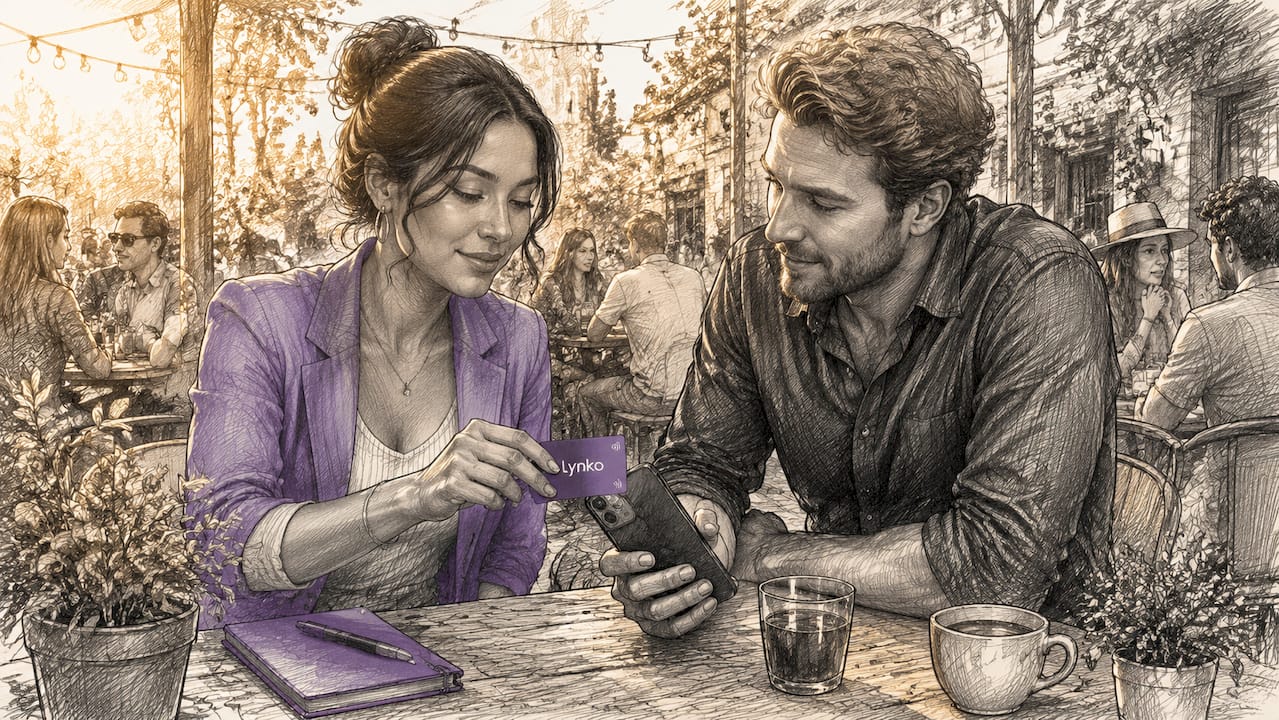
2. Cost and environmental benefits over paper cards
Paper cards carry a hidden cost that most professionals underestimate. You pay to print them, pay again when your details change, and absorb the waste when a box of 500 becomes obsolete after a job change or rebrand.
Digital business card platforms typically cost £4 to £8 per month for premium features. A single print run of 500 paper cards costs between £20 and £250, and that expense repeats every time your information changes. Over two years, a digital subscription costs less than one mid-range print run.
"Aligning networking habits with corporate social responsibility through contactless cards is becoming a core business value. The environmental case is no longer optional for brands that take sustainability seriously."
Paper card production involves wood pulp, water, energy, ink, and chemical treatments, all of which generate waste before the card even reaches your pocket. Switching to a digital card eliminates that entire supply chain for every card you would have printed.
| Factor | Paper cards | Contactless NFC cards |
|---|---|---|
| Cost per update | Reprint required (£20–£250) | Free, updated online instantly |
| Environmental impact | Wood, ink, water, and waste | No physical materials consumed |
| Longevity | Discarded when details change | One card lasts indefinitely |
| Carbon footprint | Print and delivery emissions | None after initial card production |
Freelancers and small business owners feel this most acutely. A single Lynko NFC card replaces hundreds of paper cards over its lifetime, with no reprinting and no disposal.
3. Advanced features that strengthen your personal brand
A paper card holds a name, a number, and a job title. A contactless digital card holds everything else. Digital business cards support multimedia content, booking forms, social links, portfolio links, and direct calls to action, none of which fit on 85mm × 55mm of card stock.
Lynko's NFC cards include customisable profiles with unlimited social links, Google review prompts, and contact saving. You can tailor the profile to match your brand colours, typography, and modules, so every tap delivers a consistent brand experience rather than a generic vCard.
Analytics are where digital cards genuinely outperform paper. Many digital card platforms track visits, clicks, and conversions, data that paper cards cannot generate. You can see which contacts engaged with your profile after a networking event and follow up with the ones who clicked your booking link.
- Track how many people tapped your card and viewed your profile.
- See which links received the most clicks after an event.
- Identify which networking contexts generate the most engagement.
- Use that data to refine your profile and follow-up timing.
Professionals using NFC cards project an image of technological competence that paper cards simply cannot convey. That perception matters in industries where digital fluency signals credibility.
For teams and businesses, Lynko's admin dashboard lets managers remotely control employee cards, deactivating a former employee's card instantly or updating branding across the entire team without issuing new physical cards. That level of control is not available with any paper-based system.
4. Technical standards and reliability of contactless card technology
NFC business cards operate on the ISO/IEC 14443 standard at a frequency of 13.56 MHz. That is the same standard used in contactless payment cards, which means the technology is mature, tested at scale, and supported by virtually every modern smartphone.
The communication range sits at 2–10 cm, which is deliberate. That short range means accidental reads are near impossible, and the interaction feels intentional rather than passive. The data transfer completes within seconds, faster than any paper card exchange.
| Technical specification | Detail |
|---|---|
| Standard | ISO/IEC 14443 |
| Frequency | 13.56 MHz |
| Communication range | 2–10 cm |
| App requirement | None (NDEF triggers native functions) |
| Smartphone compatibility | Nearly all modern smartphones |
One practical consideration: NFC antenna placement varies by phone model. Samsung devices typically read near the back centre, while iPhones read at the top edge. This does not affect reliability, but it does affect where you position the card during a tap.
Security is built into the standard. NFC interactions are short-range and require physical proximity, which eliminates remote interception risks. Lynko's platform adds GDPR-compliant data handling, so the data shared during a tap meets UK and European privacy requirements.
Pro Tip: If a tap does not register on the first attempt, move the card slowly across the back of the phone rather than pressing harder. You are looking for the antenna sweet spot, not applying force.
5. When professionals should switch to contactless cards
The right time to switch is before your next major networking event, not after. Paper cards handed out at a trade show are forgotten within days. A contactless card that links to a live profile with your latest work, booking link, and social channels stays relevant indefinitely.
Contactless cards suit these situations particularly well:
- Trade shows and conferences, where speed of exchange matters and you meet dozens of people in a day.
- Remote and hybrid networking, where a QR code on your digital profile does the same job as a tap.
- Tech and creative industries, where a digital card signals that you practise what you preach.
- Freelancers and consultants, who update their services, rates, or contact details regularly.
- Corporate teams, where consistent branding across every employee's card matters to the business.
The highest misconception is that paper cards carry more prestige. Instant digital sharing now signals professionalism and readiness far more effectively than a printed card that may already be out of date.
Budget is rarely a barrier. A single NFC card from Lynko replaces years of print runs. The upfront cost is comparable to one mid-range box of paper cards, and the ongoing subscription covers unlimited updates, analytics, and profile customisation.
Key takeaways
Contactless NFC business cards outperform paper cards on cost, sustainability, and functionality, making them the practical choice for any professional who networks regularly.
| Point | Details |
|---|---|
| No app needed | NDEF records trigger native phone functions, so recipients need nothing installed. |
| Lower long-term cost | A monthly subscription of £4–£8 replaces repeated print runs costing £20–£250. |
| Live profile updates | Change your details once online and every future tap reflects the update instantly. |
| Analytics included | Track taps, clicks, and profile views to measure and improve your networking. |
| Built on ISO/IEC 14443 | The same standard as contactless payments ensures reliable, secure interactions. |
Why I think the paper card debate is already settled
By Olivier
I have watched professionals defend paper cards for years, usually with the same argument: "It feels more personal." I understand the instinct. Handing someone a card is a physical gesture, and there is something satisfying about it. But the argument collapses the moment you ask how many of those cards actually led to a follow-up conversation.
The reality I have seen repeatedly is that paper cards get pocketed and forgotten. A contactless card that lands directly in someone's phone contacts, with a link to your portfolio and a booking button, has a far higher chance of generating a real outcome. The gesture of tapping a card is still personal. The difference is that the information survives the meeting.
What surprises most people is the analytics. Knowing that twelve people viewed your profile after a networking event, and that three of them clicked your calendar link, changes how you think about follow-up. You stop guessing and start working with actual signals. Paper has never offered that.
The future I expect is not a world where NFC cards replace all human interaction. It is a world where the card itself becomes a smarter starting point for a relationship. Lynko's approach, with customisable profiles, real-time data, and GDPR compliance, points in exactly that direction. The professionals who adopt this now will not be playing catch-up in two years.
— Olivier
Lynko NFC cards: built for professionals who mean business
Lynko's NFC business cards are designed for UK professionals who want a networking tool that works as hard as they do. Each card taps to share a fully customisable digital profile, with no app required on the recipient's side.
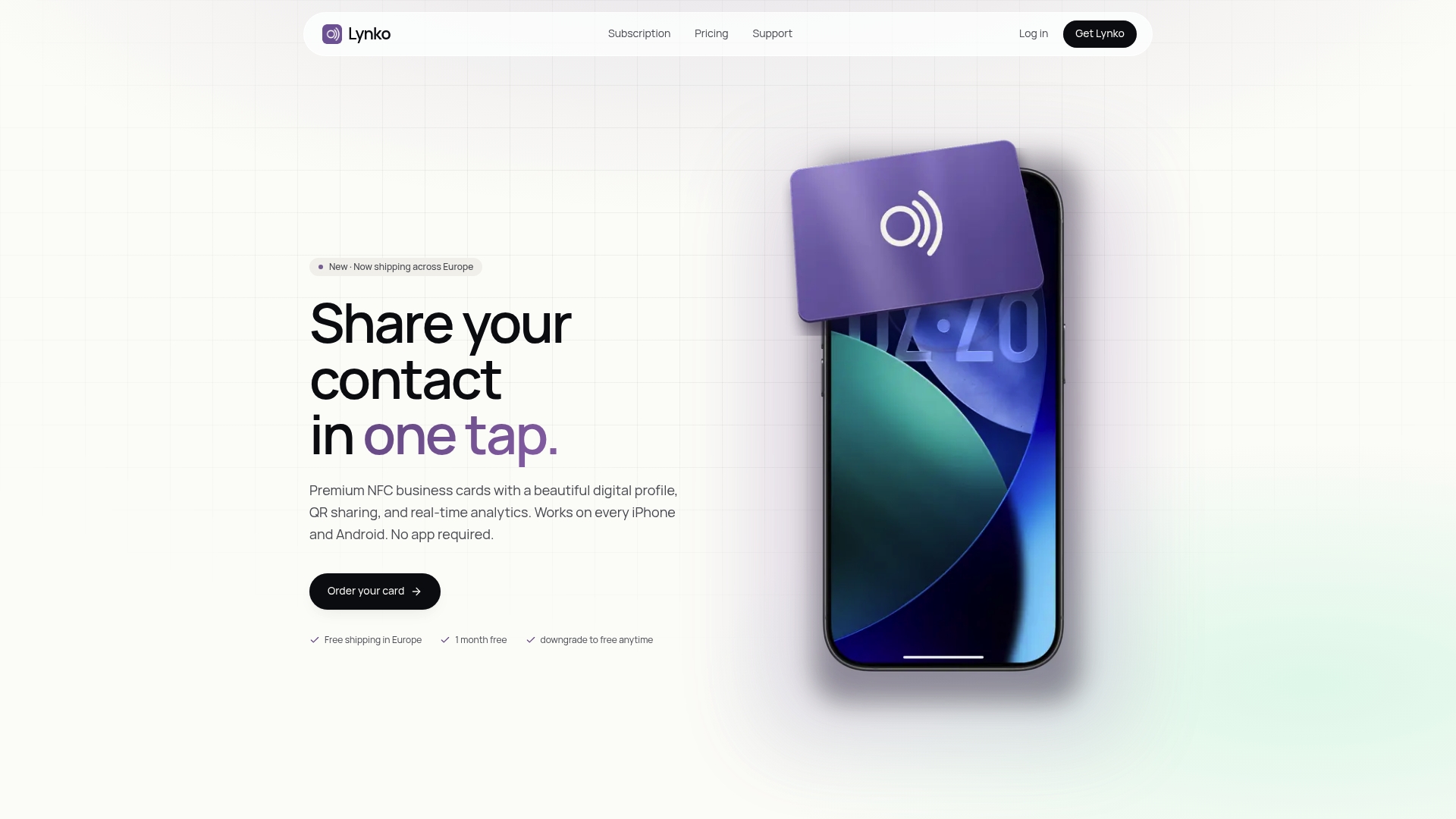
Lynko profiles support unlimited social links, Google review prompts, booking integrations, and contact saving, all managed from a single dashboard. The setup takes minutes, and every profile update goes live instantly across all your cards. GDPR compliance is built in, so your data handling meets UK and European standards without any extra configuration. If you are ready to replace a box of paper cards with something that actually tracks results, explore Lynko's smart business cards and see which plan fits your networking style.
FAQ
What are the main benefits of contactless business cards?
Contactless business cards enable instant contact sharing via NFC, require no app on the recipient's phone, and allow you to update your details without reprinting. They also provide analytics on profile views and link clicks, which paper cards cannot offer.
How do NFC business cards work?
NFC cards use the ISO/IEC 14443 standard at 13.56 MHz to transfer data at a range of 2–10 cm. When tapped against a smartphone, NDEF records trigger the phone's native browser or contact import function automatically.
Are contactless business cards eco-friendly?
Yes. Digital cards eliminate the paper, ink, water, and energy used in traditional card production. A single NFC card replaces hundreds of paper cards over its lifetime, with no waste generated when your details change.
Do recipients need a special app to receive your details?
No. NFC cards use standardised NDEF records that trigger native smartphone functions, so recipients receive your contact information directly without downloading anything.
How much do contactless business cards cost compared to paper cards?
Digital card platforms typically cost £4–£8 per month for premium features. A single print run of 500 paper cards costs £20–£250 and must be repeated every time your details change, making digital cards significantly cheaper over time.