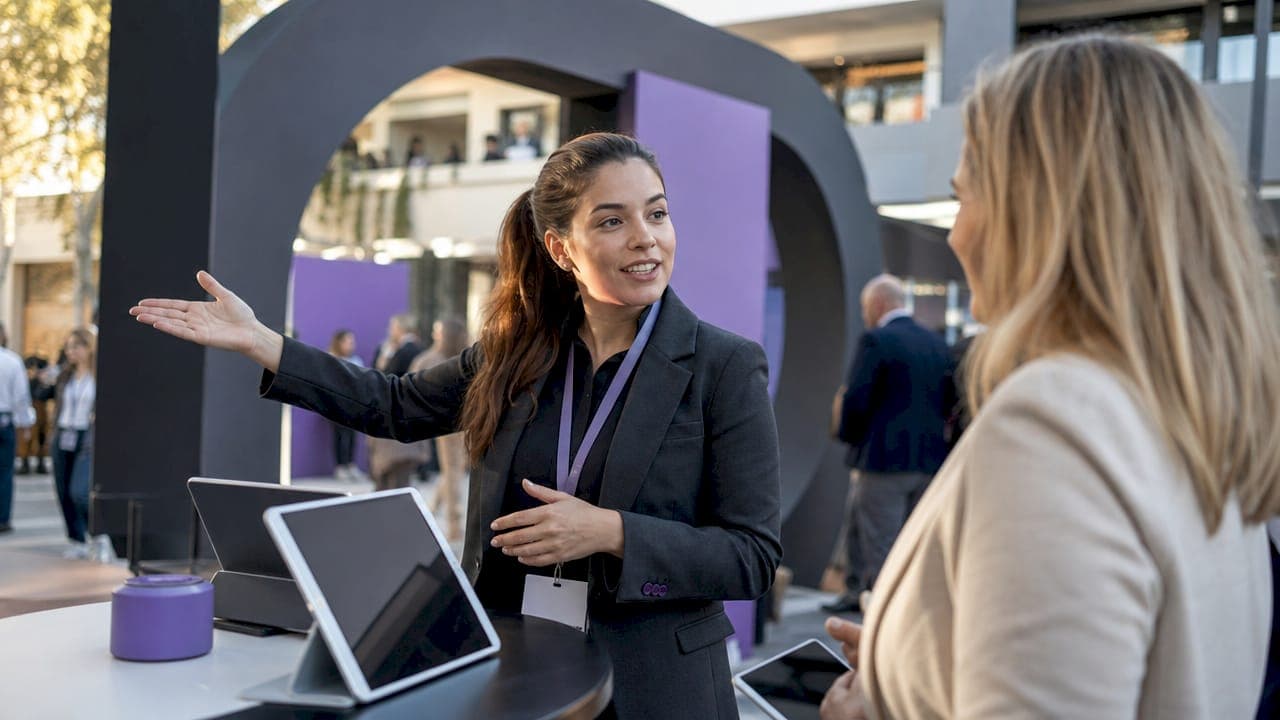
Brand identity at networking events is the sum of every visual, verbal, and behavioural signal you send before a contact even shakes your hand. Getting it right separates professionals who leave with a stack of warm leads from those who leave with a pocket full of forgotten paper. The difference lies in preparation, visual coherence, and the tools you use to make every interaction count. This guide covers the practical methods, digital formats, and common mistakes that determine whether you showcase brand identity at networking events with authority or blend into the background.
What essential tools do you need to present your brand at networking events?
Strong event branding starts with the right physical and digital assets working together. Neither alone is sufficient. A polished banner with no follow-up mechanism loses contacts. A slick digital portfolio with no visual anchor gets ignored in a crowded room.
Physical display essentials
Vertical displays, lightboxes, and pull-up banners remain the backbone of event presence. Eye-level hanging at 57–60 inches significantly increases engagement compared to table-level placements. That height guideline exists because it aligns with natural sightlines, meaning attendees notice your display without looking up or down.
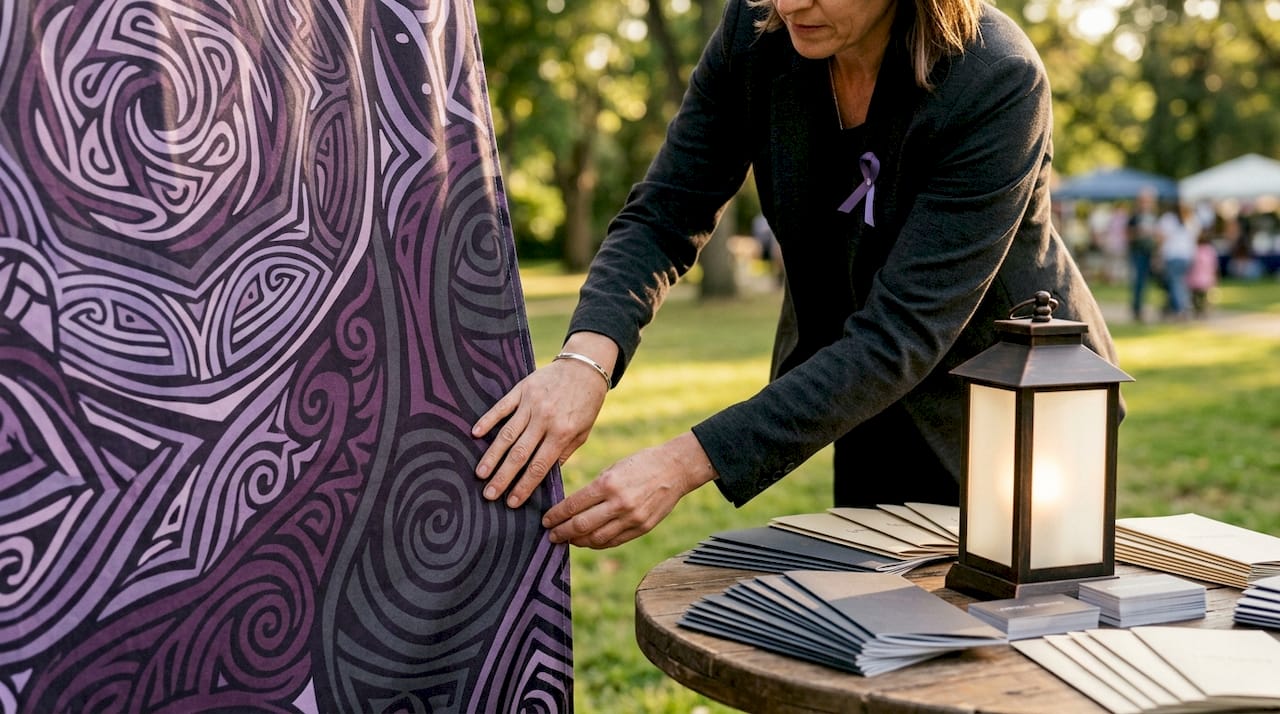
Consistent colour palettes and spotlight visual motifs are not decorative choices. Unified design systems improve brand recall in crowded venues where attendees process dozens of visual signals per minute. Pick two or three brand colours and repeat them across every physical surface.
Digital tools that drive engagement
Tablets with interactive portfolio case studies are among the most effective digital assets at events. Interactive tablet showcases achieved an 18% email capture rate from overall footfall. That figure matters because email capture is a direct measure of genuine interest, not just passing curiosity.
QR codes, NFC business cards, and digital portfolios complete the toolkit. Each removes a friction point from the contact exchange process. Getlynko’s NFC cards, for example, let professionals share a fully branded digital profile by tapping a card to any smartphone, with no app required.
| Tool | Functionality | Setup difficulty | Engagement potential |
|---|---|---|---|
| Pull-up banner | Visual anchor, brand awareness | Low | Moderate |
| Interactive tablet | Portfolio demos, email capture | Medium | High |
| QR code card | Instant portfolio or contact link | Low | High |
| NFC business card | Tap-to-share digital profile | Low | Very high |
| Lightbox display | Illuminated brand visual | Medium | Moderate |
Pro Tip: Always download your digital portfolio offline before the event. Venue Wi-Fi is unreliable, and a buffering portfolio kills momentum faster than any competitor.
Which interactive strategies work best for engaging your audience?
Interactive exhibition booths achieve up to 69% engagement conversion from passing traffic and boost on-site sales by 36% compared to static displays. Static displays ask nothing of the attendee. Interactive ones pull people in and give them a reason to stay.
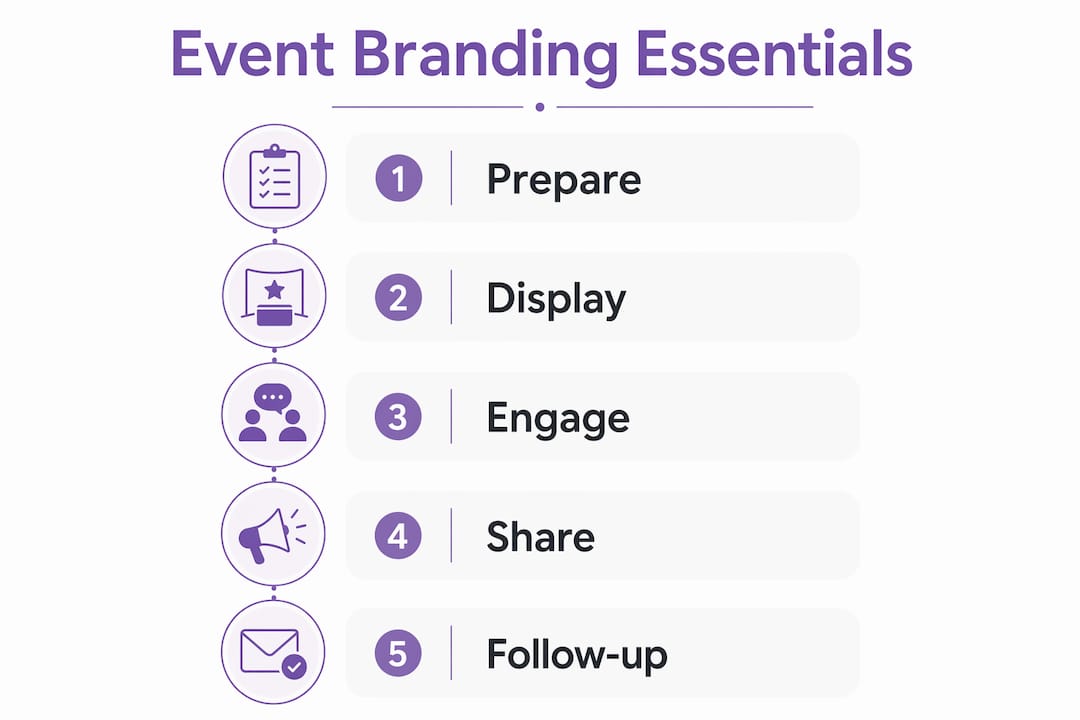
The most effective way to structure that interaction is to treat each engagement as a three-stage funnel.
-
Anchor phase. A single bold visual or motion element stops foot traffic. A looped micro-documentary or animated case study works well here. Keep it visually arresting and silent-friendly, since event floors are loud.
-
Engagement phase. Once someone stops, move them into a brief live demo or portfolio walkthrough. The optimal demo length is 2–3 minutes, focused on one impactful moment. Longer demos cause attention to drop sharply.
-
Exit phase. Every interaction needs a clear, frictionless call to action. A QR code, an NFC tap, or a simple “I’ll send you the link now” closes the loop and creates a follow-up opportunity.
“Effective networking treats engagements as conversion funnels with anchor points, interactive engagement, and clear exit CTAs. Without a defined exit step, even the best demo produces no lasting contact.” Live portfolio pop-ups: designing high-converting demo booths 2026
Multi-sensory portfolios strengthen the engagement phase. Videos, animations, and live product demos each appeal to different learning styles. Combining two or three formats within a single booth increases the chance that any given attendee finds something that resonates.
Pro Tip: Prepare a 90-second version of your demo for busy periods and a full 3-minute version for quieter moments. Matching demo length to available attention is a skill most presenters overlook.
How can you align event branding with your overall brand image?
Authenticity is the most underrated element when professionals present brand image effectively at events. Successful creators prioritise relevant, high-impact projects tailored to the specific event audience rather than displaying a generic portfolio of everything they have ever done. A financial services consultant at a fintech summit should lead with fintech case studies, not a broad showcase of past clients.
Visual coherence reinforces that authenticity. Every element, from your name badge lanyard to your tablet screensaver, should reflect the same colour palette, typeface, and tone. When attendees see consistency, they read it as competence.
Practical steps for authentic brand alignment:
-
Select three to five projects that directly address the interests of the event’s likely attendees.
-
Use the same logo, colour hex codes, and font family across all physical and digital materials.
-
Write a one-sentence brand statement that answers “what do I do and for whom” and place it at eye level on your display.
-
Create an event-specific landing page or QR destination that mirrors your booth’s visual identity.
-
Refresh your digital portfolio with at least one piece of work produced in the last six months.
Lean digital portfolios featuring a short bio, three key projects, and clear contact information shared via QR codes reduce friction and improve the quality of follow-ups. Attendees who receive a focused, relevant portfolio are far more likely to respond than those who receive a link to a sprawling website.
What digital tools make sharing your work at events effortless?
The shift from paper to digital contact sharing is not a trend. It is a permanent change in how professionals expect to exchange information. QR-linked digital portfolios are replacing traditional business cards by offering a frictionless, modern contact sharing experience that professionals now prefer.
NFC cards versus QR codes versus traditional cards
| Format | Speed of sharing | Updatable after printing | Analytics available | Works without internet |
|---|---|---|---|---|
| Traditional paper card | Instant | No | No | Yes |
| QR code card | Fast (scan required) | Yes (if linked) | Limited | No |
| NFC business card | Instant (tap) | Yes | Yes | Yes (card tap) |
NFC business cards remove the scan step entirely. A single tap transfers your full digital profile to any smartphone. Getlynko’s NFC business cards go further by offering real-time analytics, customisable profiles, and GDPR-compliant contact saving, all without requiring the recipient to download an app.
For professionals focused on building brand awareness at events, the analytics feature alone justifies the switch. Knowing which contacts tapped your card, when, and how many times they revisited your profile turns a passive exchange into a measurable lead.
Pro Tip: Link your NFC card or QR code to a profile that includes your social links, a short video introduction, and a one-click “save contact” button. Contacts saved digitally are far less likely to be lost than paper cards.
What common mistakes undermine your brand showcase at events?
Even well-prepared professionals make avoidable errors that cost them contacts and credibility. The most damaging mistakes share a common cause: prioritising appearance over function.
-
Demos that run too long. Anything beyond three minutes loses most attendees. Practise cutting your pitch to its single most compelling moment.
-
Inconsistent branding across materials. A polished banner paired with a generic email signature confuses attendees. Every touchpoint must match.
-
Relying on venue Wi-Fi. Event Wi-Fi fails at the worst moments. All digital assets should work offline or via mobile data.
-
No clear call to action. Attendees who enjoy your demo but receive no next step simply walk away. Every interaction needs an exit mechanism: a QR code, an NFC tap, or a calendar link.
-
Neglecting pre-event outreach. Proactive networking via pre-event announcements turns chance encounters into scheduled meetings, which significantly increases conversion rates. Posting on LinkedIn before the event and using “Meet Me” style digital cards to book slots in advance fills your schedule before you arrive.
Pro Tip: Send a short LinkedIn message to confirmed attendees two days before the event. Reference a specific topic from the event programme. Personalised outreach converts far better than a generic “see you there” post.
Key takeaways
Professionals who showcase brand identity at networking events most effectively combine consistent visual identity, interactive digital tools, and a structured three-stage engagement funnel to convert foot traffic into lasting contacts.
| Point | Details |
|---|---|
| Eye-level display placement | Hang vertical displays at 57–60 inches to align with natural sightlines and maximise visibility. |
| Three-stage engagement funnel | Structure every interaction as anchor, engagement, and exit to capture contacts reliably. |
| Demo length discipline | Keep live demos to 2–3 minutes, focused on one impactful moment, to hold attention. |
| Digital over paper | NFC cards and QR-linked portfolios outperform paper cards for follow-up quality and measurability. |
| Pre-event outreach | Schedule meetings before the event via LinkedIn or digital “Meet Me” cards to maximise ROI. |
What I have learned from watching professionals get this wrong
Most professionals I have observed at networking events invest heavily in their display and almost nothing in their exit strategy. They have a beautiful banner, a well-rehearsed pitch, and then they hand over a paper card that gets lost in a jacket pocket by Tuesday. The contact evaporates.
The shift that changes everything is treating the exit moment as the most important part of the interaction, not an afterthought. When I started advising clients to build their entire booth flow backwards from the follow-up mechanism, their post-event conversion rates improved noticeably. The demo exists to earn the right to share your contact. The display exists to earn the right to start the demo.
Authenticity matters more than production value. I have seen professionals with a single tablet and a well-curated three-project portfolio outperform elaborate multi-screen setups. The reason is simple: attendees trust specificity. A portfolio that speaks directly to their industry signals that you understand their world. A generic showcase signals that you are hoping someone will find something relevant.
My practical recommendation is to build two versions of everything: a 90-second version for busy periods and a full version for when someone genuinely wants to go deeper. Flexibility in the moment is what separates professionals who adapt to the room from those who deliver the same pitch regardless of who is standing in front of them.
— Olivier
How Getlynko helps professionals share their brand at events
Lynko NFC and digital business cards are built for exactly the kind of frictionless, brand-consistent contact sharing this article describes. One tap transfers your full digital profile, including social links, portfolio highlights, and a save-contact button, to any smartphone without requiring an app.
Profiles are fully customisable with brand themes and modules, so every contact receives an experience that reflects your visual identity, not a generic vCard. Real-time analytics show you who engaged with your profile after the event, turning every tap into a measurable lead. For professionals serious about building brand awareness at events, Getlynko removes the gap between a great conversation and a confirmed follow-up.
FAQ
What does “brand identity” mean at a networking event?
Brand identity at a networking event is the combination of your visual materials, verbal messaging, and digital presence that communicates who you are and what you offer. Consistency across all three elements creates immediate recognition and trust.
How long should a live demo be at a networking event?
The optimal demo length is 2–3 minutes, focused on a single impactful moment. Longer demos cause attendee attention to drop sharply, particularly in busy event environments.
Are NFC business cards better than QR codes for networking?
NFC cards require no scanning step, work without internet on the recipient’s end, and typically offer real-time analytics that QR codes do not. For speed and measurability, NFC cards outperform both QR codes and traditional paper cards.
How do I capture contacts effectively at a networking event?
Use a frictionless exit mechanism at the end of every interaction: an NFC tap, a QR code, or a direct calendar link. Interactive tablet showcases have achieved an 18% email capture rate from overall footfall, which shows that digital tools significantly outperform passive displays.
What is the biggest mistake professionals make when showcasing their work at events?
The most common mistake is investing in display quality while neglecting the follow-up mechanism. A strong demo with no clear next step produces no lasting contact. Every interaction needs a defined exit action that captures the attendee’s details before they walk away.