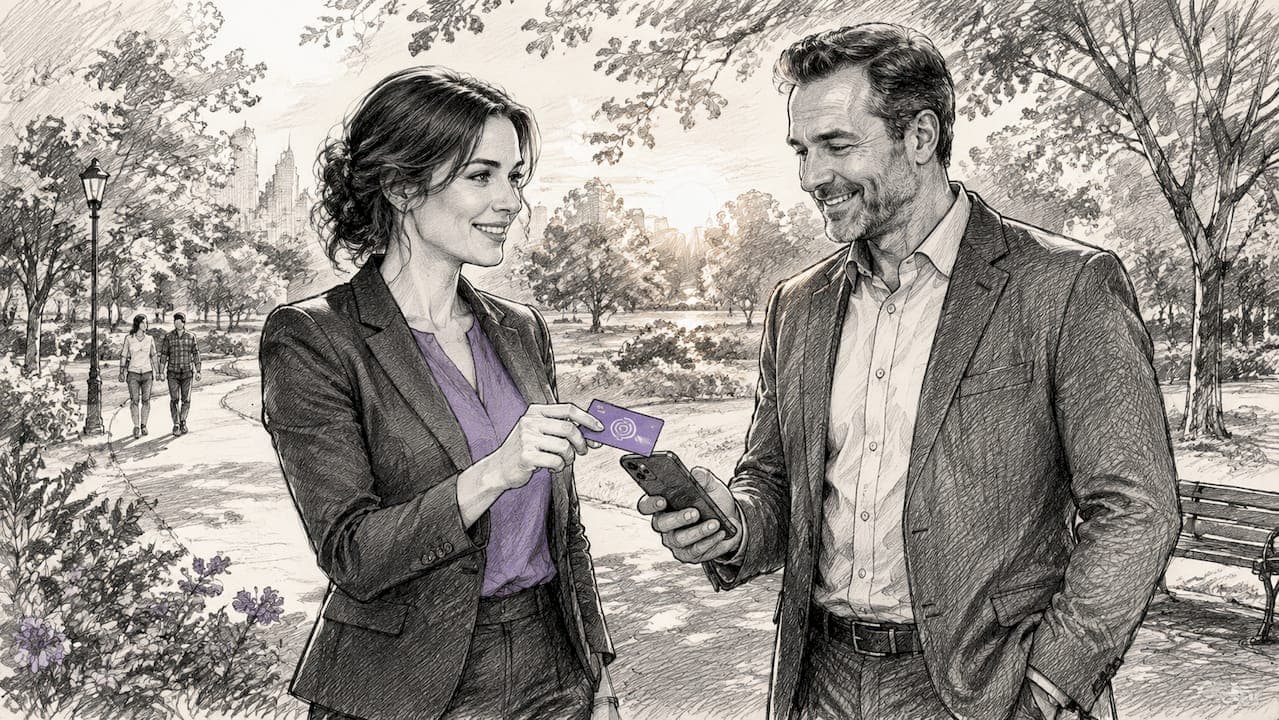
Near Field Communication (NFC) technology is defined as a short-range wireless standard that transfers data between two devices with a single tap. For real estate agents, understanding how NFC improves realtor networking means recognising that a one-second tap replaces a paper card, a manual CRM entry, and a delayed follow-up email. Agents who respond first to captured leads have a significantly higher chance of securing clients. That speed advantage alone makes NFC one of the most practical tools available to agents working open houses, property launches, and industry events in 2026.
How does NFC technology work for real estate agents?
NFC transmits data over a distance of roughly four centimetres, which means physical proximity is required for every exchange. That constraint is a feature, not a flaw. It creates a deliberate, face-to-face moment that paper cards mimic but digital profiles far exceed.
When an agent taps an NFC card against a prospect's smartphone, the phone receives a signal and opens a digital profile in the browser. No app is required. The profile can display active listings, a booking calendar, video introductions, vendor recommendations, and social links, all in one place. Clients frequently describe these profiles as more advanced and "all-in-one" compared to paper cards.

The critical distinction most agents miss is the difference between one-way sharing and two-way contact capture. One-way sharing pushes the agent's details to the prospect. Two-way capture prompts the prospect to submit their own contact details in return, which then auto-populates the agent's CRM without any manual entry. That single feature turns a handshake into a recorded lead.
Pro Tip: Set your NFC profile to display a contact-capture form as the first element prospects see. Most agents bury this step, losing the lead before the conversation ends.
A common pitfall is treating an NFC card like a static traditional card. The profile it links to must be a dynamic hub, not a fixed URL. NFC-enabled profiles linked to dynamic hubs allow agents to update listings, schedules, and contact details in real time, without reprinting a single card.
What are the key advantages of NFC over traditional networking tools?
The gap between paper cards and NFC profiles is not cosmetic. It is structural. Paper cards deliver a fixed snapshot of an agent at one point in time. NFC profiles deliver a live, updateable professional identity.
The four most significant advantages are:
- Speed of follow-up. Agents using NFC report lead response times dropping from days to minutes. Quick initial contact is critical in winning clients, and NFC removes every friction point between meeting and follow-up.
- Dynamic profile content. An NFC profile can include active listings, virtual tours, a booking link, and a preferred vendor list. Every element updates centrally, so the card never goes out of date.
- Professional perception. Prospects notice the difference. Digital cards are perceived as more advanced and comprehensive, which signals to clients that the agent operates at a higher professional standard.
- Automatic CRM population. Two-way contact exchange removes manual data entry entirely. Leads captured at a Saturday open house appear in the CRM before the agent drives home.
The contactless business card benefits extend beyond convenience. Agents who eliminate manual entry also eliminate transcription errors, which means fewer lost leads and cleaner data for follow-up campaigns. That compounds over a full year of networking events.
How do NFC cards integrate with hybrid digital strategies including QR codes?
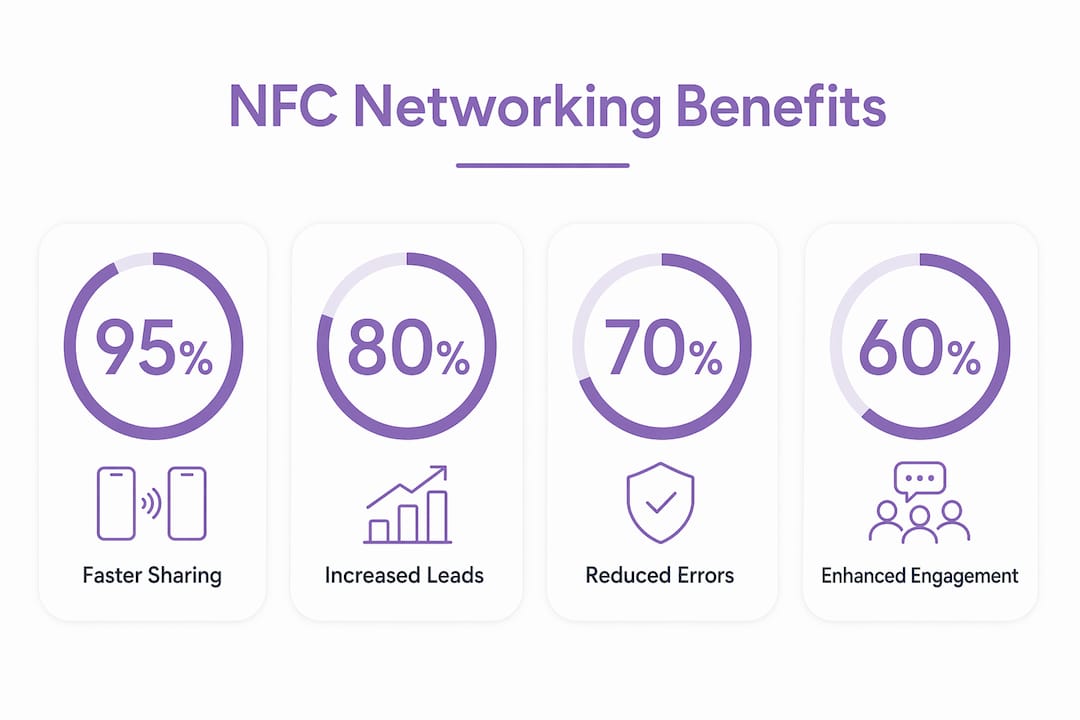
NFC and QR codes solve different problems. Treating them as alternatives is a strategic mistake. The strongest agents deploy both, assigning each technology to the contexts where it performs best.
| Context | Best tool | Reason |
|---|---|---|
| Personal meeting or event tap | NFC | Instant, premium, no camera required |
| Open house sign-in sheet | QR code | Works at distance, no physical contact needed |
| Yard signs and brochures | QR code | Universal scanning, works across all devices |
| Private client meeting | NFC | High-touch, deliberate, memorable interaction |
| Email signature or social media | QR code | Shareable without physical card present |
QR codes outperform NFC in open houses and on yard signs because they work at distance and require only a camera. NFC is limited to physical proximity, which makes it unsuitable for passive marketing materials. High-performing agents treat QR as the core infrastructure and NFC as a premium, optional layer on top.
The key to making this hybrid approach work is linking both technologies to the same central digital profile. When a prospect scans a yard sign QR code or taps an NFC card at a networking dinner, they land on the same hub. Updates made once appear everywhere. That consistency protects the agent's brand and removes the risk of prospects seeing outdated information.
What practical steps can realtors take to maximise NFC networking success?
Adopting NFC without a clear process produces mixed results. The agents who see the strongest return follow a structured approach from setup through to follow-up.
- Configure two-way contact capture first. Before anything else, set up the lead capture form on your digital profile. This is the most impactful NFC feature and the one most commonly skipped by new users.
- Link your profile to live content. Connect your NFC hub to your current listings, a live booking calendar, and your vendor list. Static profiles waste the technology's core advantage.
- Integrate with your CRM from day one. Map the contact-capture form fields directly to your CRM. Leads should appear automatically, not after a manual export.
- Use analytics to prioritise follow-up. Digital card analytics track profile views, link clicks, and repeated visits. An agent who knows a prospect visited their listings page three times in 48 hours has a clear signal to call.
- Pair NFC with a digital sign-in tool at open houses. Use a QR code at the door for walk-ins and your NFC card for personal introductions inside. Both feed the same CRM.
Pro Tip: Carry your NFC card in your dominant hand at events. Offering a tap feels natural when the card is already in your hand. Agents who keep it in a bag or pocket miss the moment.
Building brand identity at networking events depends on consistency. Your NFC profile should carry the same photography, colour palette, and tone as your other marketing materials. A mismatched profile undermines the professional impression the tap creates.
Digital contact sharing also extends the relationship beyond the event. When a prospect saves your contact from your NFC profile, they receive your photo, your listings link, and your booking URL in one action. That is a stronger first impression than any paper card delivers.
NFC profiles can also carry revenue beyond contact sharing. Promoting preferred vendors on a digital profile strengthens business relationships and can generate additional income through referral arrangements. Agents who treat their digital profile as a business platform rather than a digital card gain a measurable edge.
Key takeaways
NFC technology gives real estate agents a faster, more professional, and more data-rich networking tool than any paper-based alternative, provided it is set up with two-way lead capture and linked to a dynamic, centrally managed profile.
| Point | Details |
|---|---|
| Two-way capture is non-negotiable | Configure lead capture forms before your first event to auto-populate your CRM. |
| Dynamic profiles outperform static links | Link your NFC card to a live hub so listings and schedules update without reprinting. |
| Hybrid NFC and QR covers every context | Use NFC for personal meetings and QR codes for signage, brochures, and open houses. |
| Analytics drive smarter follow-up | Track profile views and link clicks to identify and prioritise the warmest leads. |
| Speed of response wins clients | Agents who follow up within minutes of a tap have a significantly higher conversion rate. |
Why I think most agents are still using NFC wrong
I have watched NFC cards move from novelty to near-standard issue at property events over the past two years. The technology is no longer the differentiator. How agents use it is.
The mistake I see repeatedly is agents who tap, share, and stop. They treat the NFC card as a digital replacement for a paper card, which misses the point entirely. The real value is in the data that flows back. A prospect who taps your card and fills in a contact form is a warm lead. A prospect who taps and leaves is a missed opportunity. The difference is whether you asked them to engage.
The second mistake is neglecting the profile itself. Real estate networking depends on timely, thoughtful introductions. A profile with a professional video introduction, current listings, and a one-click booking link does that work for you before you even speak. An empty or outdated profile does the opposite.
My honest recommendation: treat your NFC profile as your most important marketing asset, not a tech accessory. Update it weekly. Check your analytics after every event. Follow up the same day. The agents who do this consistently are the ones who close more deals from networking, not because NFC is magic, but because they built a system around it.
— Olivier
Lynko's NFC cards for real estate agents
Real estate agents who want to put this into practice without building from scratch have a clear starting point with Lynko.
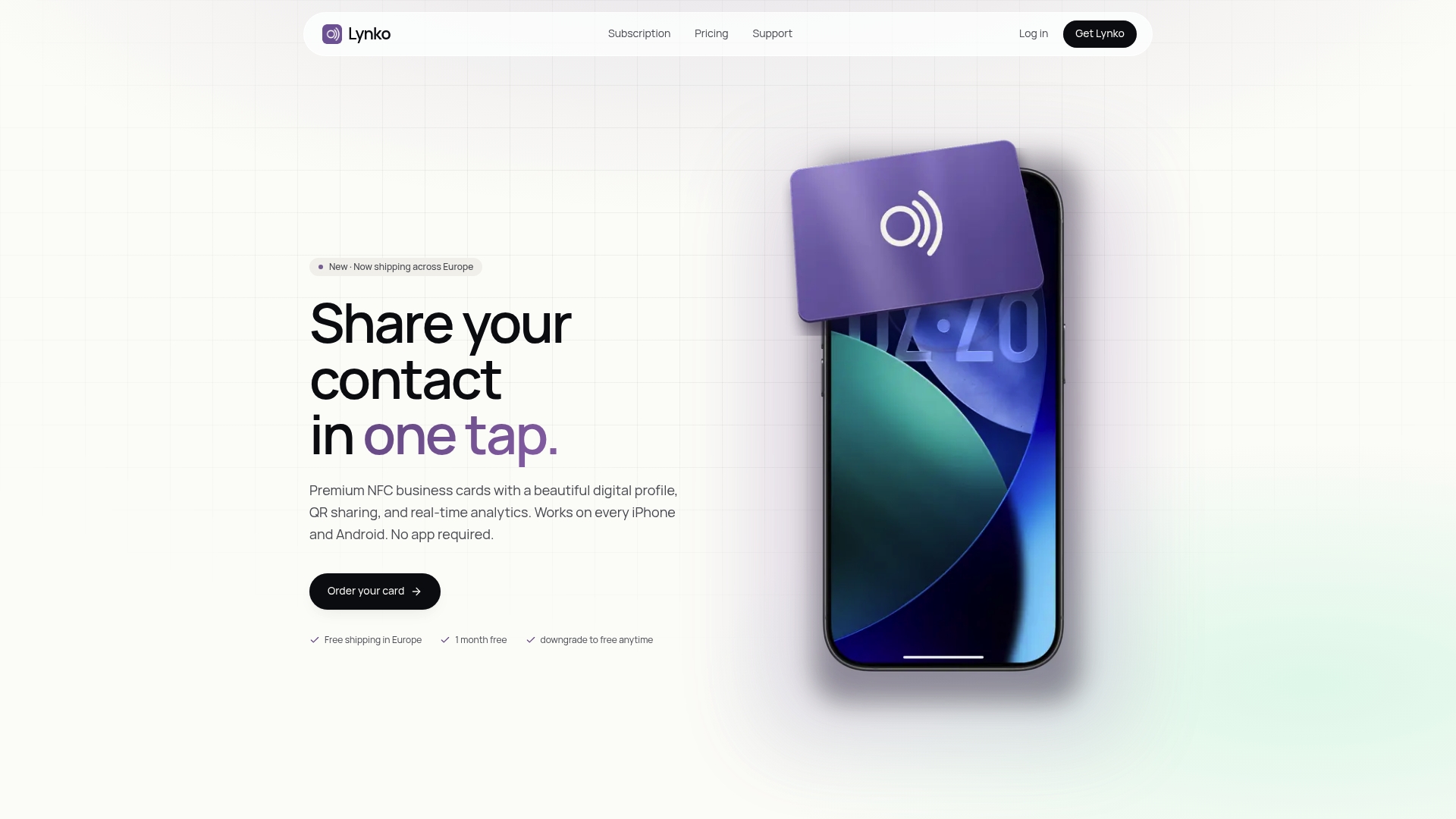
Lynko's NFC business cards are built for exactly the workflow described in this article. Each card links to a fully customisable digital profile with two-way contact capture, CRM integration, unlimited social links, Google review prompts, and a real-time analytics dashboard. Profiles update instantly, so your listings and booking calendar are always current. The cards work with any smartphone without requiring an app, and the platform is fully GDPR compliant. For agents who want a complete digital card setup that covers both NFC and QR, Lynko handles both from a single profile hub.
FAQ
What is NFC and how does it work for realtors?
NFC stands for Near Field Communication, a wireless standard that transfers data when two devices are within a few centimetres of each other. For realtors, tapping an NFC card against a prospect's phone opens a digital profile instantly, with no app required.
Are NFC cards better than paper business cards for real estate agents?
NFC cards outperform paper cards in every measurable way for active networkers. They deliver dynamic profiles with live listings and booking tools, capture leads automatically, and provide analytics that paper cards cannot.
How do agents collect leads with NFC at open houses?
Agents use two-way contact capture on their NFC profile, which prompts prospects to submit their details in exchange for the agent's information. Those details feed directly into the CRM without manual entry.
Should realtors use NFC or QR codes?
The strongest approach uses both. QR codes work best for yard signs, brochures, and open house sign-in sheets, while NFC delivers a premium, high-touch interaction during personal meetings and events.
Do prospects need a special app to receive an NFC card tap?
No app is required. Modern smartphones read NFC signals natively and open the agent's digital profile directly in the phone's browser.