
Branding in contact exchange is defined as the deliberate use of a consistent visual identity, tone, and positioning to make every shared contact detail a signal of credibility rather than just data. Personal branding contributes 17.9% to business communication effectiveness. That figure means your brand does measurable persuasion work before you say a single word. The role of branding in contact exchange goes far beyond aesthetics. It determines whether a new connection remembers you, trusts you, and chooses to follow up. Professionals who treat contact sharing as a branding moment consistently build stronger networks than those who treat it as a formality.
How does branding build trust during contact exchange?
Brand consistency is the single most powerful trust mechanism in professional networking. Aligning visual and tonal brand expressions produces a 20–30% increase in brand recognition and audience engagement across contact touchpoints. That increase compounds over time. Every time a contact sees your logo, reads your tone, or visits your digital profile and finds the same coherent identity, their brain registers you as reliable.

Inconsistent branding across platforms creates mental instability and reduces trust. Think of brand consistency as a routing protocol. When your LinkedIn profile, digital business card, and follow-up email all carry the same colours, voice, and positioning, your contact's brain routes you into the "trusted" category automatically. When those elements clash, uncertainty replaces confidence.
Branding also creates what researchers call a psychological switching cost. Branded contacts become part of a contact's identity, making them preferable over generic, unbranded alternatives. A professional with a clear, consistent brand is harder to replace in someone's network than one who shares only a name and phone number. That stickiness is the real competitive advantage of strong personal branding.
Pro Tip: Audit every touchpoint a new contact will see within 48 hours of meeting you. Your digital card, LinkedIn profile, and first email should share the same profile photo, colour palette, and tone. Mismatches at this stage undo the trust built in person.
- Consistent visual identity across platforms reinforces subconscious trust
- Tonal alignment in written communications signals professionalism and reliability
- A unified brand across digital and physical touchpoints reduces a contact's uncertainty
- Psychological switching costs make your branded presence harder to replace in a network
What branding elements matter most in contact sharing?
The branding elements that drive the strongest results in contact exchange are visual identity, digital profile quality, and communication tone. These three components work together. A polished logo on a poorly designed digital profile undermines credibility just as much as no logo at all.
Visual identity
Your logo, colour palette, and photographic style are the fastest signals your brand sends. A contact processes these in under a second. Strong brands pre-sell confidence before conversations begin, freeing the interaction to focus on genuine human connection. That pre-sold confidence only works when visual elements are applied consistently across every surface a contact touches.
Digital profile quality
A cluttered or incomplete digital profile is the equivalent of handing over a crumpled business card. Treating contact exchange as channel calibration means directing contacts to a filtered, curated profile rather than raw private information. This signals that you respect their time and your own professional boundaries. Professionals who showcase brand identity at networking events through well-structured digital profiles consistently report stronger post-event engagement.
Communication tone
Tone is the verbal equivalent of your logo. A formal logo paired with a casual, inconsistent email voice creates cognitive dissonance. Your tone in follow-up messages, social captions, and even your digital card bio should match the personality your visual brand promises.
The practical steps to get these elements right follow a clear sequence:
- Write a one-sentence brand positioning statement that names your expertise, your audience, and the value you deliver.
- Apply your primary colour and logo to every digital profile, card, and email signature.
- Choose a consistent photographic style for your profile images across all platforms.
- Write a short bio in your brand voice and use the same version everywhere.
- Review all touchpoints quarterly and update any element that has drifted from the standard.
Branding clarity directly influences whether you appear on networking shortlists. Ambiguous personal brands cause professionals to default to familiar names when making referrals. A clear brand positioning statement solves this problem at the source.
Pro Tip: Use NFC-enabled digital business cards like those from Lynko to share a fully branded digital profile in a single tap. This removes the friction of manual data entry and keeps every shared contact detail on-brand from the first moment.
How does branding affect follow-up after contact exchange?
Contact exchange is the setup. The follow-up is where the real value is captured or lost. The strongest return on investment in contact exchange comes from personalised follow-up that references specific conversations and adds immediate value. Generic follow-ups, regardless of how polished the initial card was, fail to convert connections into relationships.
Branded follow-up works because it reduces the persuasion load. When your email arrives with a recognisable name, consistent visual identity, and a tone that matches the person your contact met in the room, they do not need to re-evaluate you. The trust built during the initial exchange carries forward. That continuity is what separates professionals who build lasting networks from those who collect contacts they never hear from again.
- Reference a specific detail from your conversation in the first line of your follow-up message.
- Use your brand colours and logo in your email signature to maintain visual continuity.
- Add immediate value by sharing a relevant article, resource, or introduction within 48 hours.
- Keep the tone consistent with your digital profile and the personality you presented in person.
- Use digital card platforms that allow personalised notes to be attached to shared profiles.
The weakest link in contact exchange is the follow-up. Branded digital tools that allow personalised notes referencing specific discussions are a proven method to stand out in a crowded inbox. Lynko's digital profiles support this by giving professionals a shareable, branded contact page that contacts can revisit long after the initial meeting.
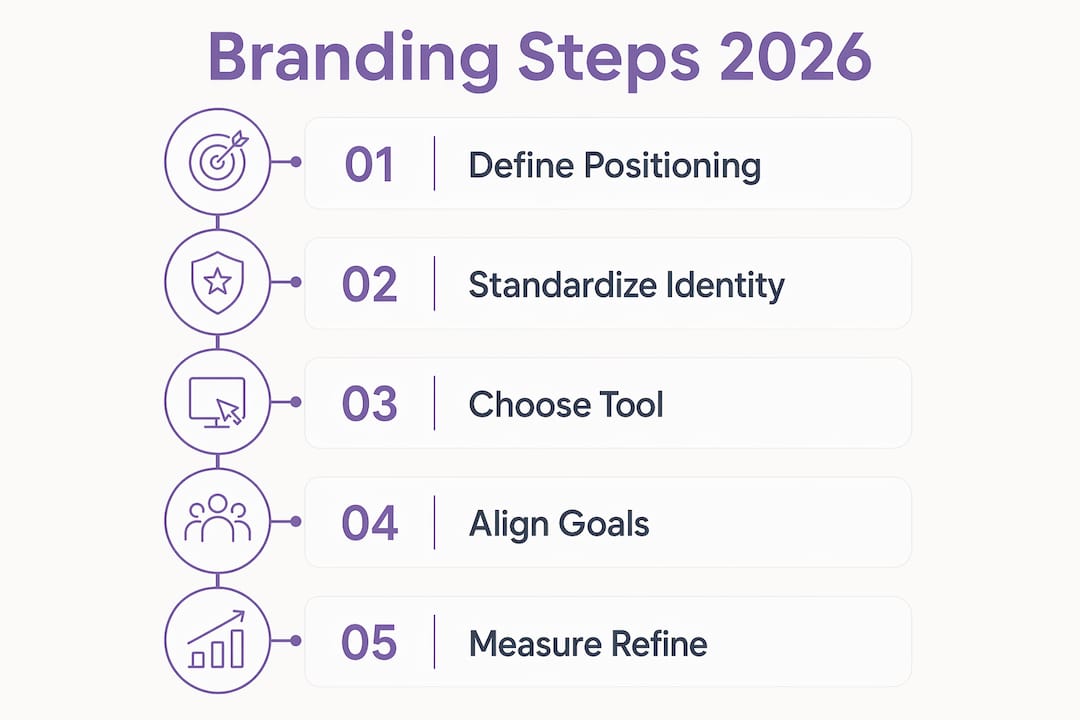
How to build a branding strategy for contact exchange in 2026
A branding strategy for contact exchange does not require a marketing budget. It requires clarity, consistency, and the right tools. The professionals who get the best results from networking treat every contact moment as a brand expression, not an administrative task.
Step 1: Define your brand positioning
Write a single sentence that answers three questions: who you help, what you do, and why you are the right choice. This sentence becomes the foundation for every bio, card, and follow-up you write. Clear segment placement helps professionals appear in peer conversations and referral shortlists more frequently.
Step 2: Standardise your visual identity
Choose two brand colours, one typeface, and one profile photograph. Apply these across LinkedIn, your digital business card, your email signature, and any other platform where contacts will find you. Variation at this level is the most common cause of brand inconsistency.
Step 3: Choose the right contact sharing tool
The tool you use to share contact details is itself a brand statement. A paper card with no digital follow-up signals that you are not keeping pace with professional norms. NFC-enabled digital business cards allow professionals to share a fully branded digital profile with a single tap, no app required. Lynko cards support custom themes, unlimited social links, and Google reviews, all within a GDPR-compliant framework.
Step 4: Align your networking goals with your brand
Your brand should signal the type of connections you want to attract. A consultant targeting senior executives needs a different visual register and tone than a creative freelancer targeting start-ups. Misalignment here means you attract the wrong contacts, regardless of how consistent your brand is internally.
Step 5: Measure and refine
Use the analytics built into digital card platforms to track how often your profile is viewed and which links contacts click. Lynko provides real-time analytics that show exactly how contacts engage with your shared profile. That data tells you which elements of your brand are working and which need adjustment.
Digital contact sharing in 2026 has moved well beyond exchanging phone numbers. Professionals who treat their digital profile as a living brand asset, updated regularly and shared consistently, build networks that compound in value over time.
Key takeaways
Strong personal branding transforms contact exchange from a data transaction into a trust-building process that drives lasting professional relationships.
| Point | Details |
|---|---|
| Branding drives communication | Personal branding contributes 17.9% to business communication effectiveness, making it a measurable networking asset. |
| Consistency builds trust | Aligned visual and tonal branding produces a 20–30% increase in brand recognition across contact touchpoints. |
| Follow-up captures the value | Personalised, branded follow-up that references specific conversations delivers the strongest return from any contact exchange. |
| Digital tools reinforce the brand | NFC-enabled digital cards like Lynko's share a fully branded profile instantly, removing friction and maintaining consistency. |
| Clarity wins shortlists | Professionals with clear brand positioning appear more frequently in peer referrals and networking shortlists. |
Why most professionals get contact exchange completely wrong
Most professionals treat contact exchange as a logistical problem. They focus on the mechanics: which app, which card format, which QR code. The mechanics matter, but they are not the point. The point is what the contact feels when they receive your details and what they remember when they open their phone three days later.
I have watched professionals hand over beautifully designed cards and then send a follow-up email that looks like it came from a different person entirely. The card promised one brand. The email delivered another. That disconnect is enough to erase the trust built in the room.
The professionals who build the strongest networks are not always the most polished. They are the most consistent. Their card, their profile, their email, and their conversation all feel like the same person. That coherence is what makes a contact feel safe enough to refer you, recommend you, or bring you into a room you were not in before.
Branding is not about looking impressive. It is about being recognisable. Recognisability is what gets you remembered. Being remembered is what gets you the call.
The other mistake I see constantly is treating the card as the end of the process. The card is the beginning. The follow-up is where the relationship either starts or dies. A branded, personalised message sent within 24 hours of meeting someone is worth more than any card design. Combine both, and you have a contact exchange process that actually builds something.
— Olivier
How Lynko supports branded contact exchange
Lynko's NFC business cards give professionals a practical way to put consistent branding at the centre of every contact exchange.
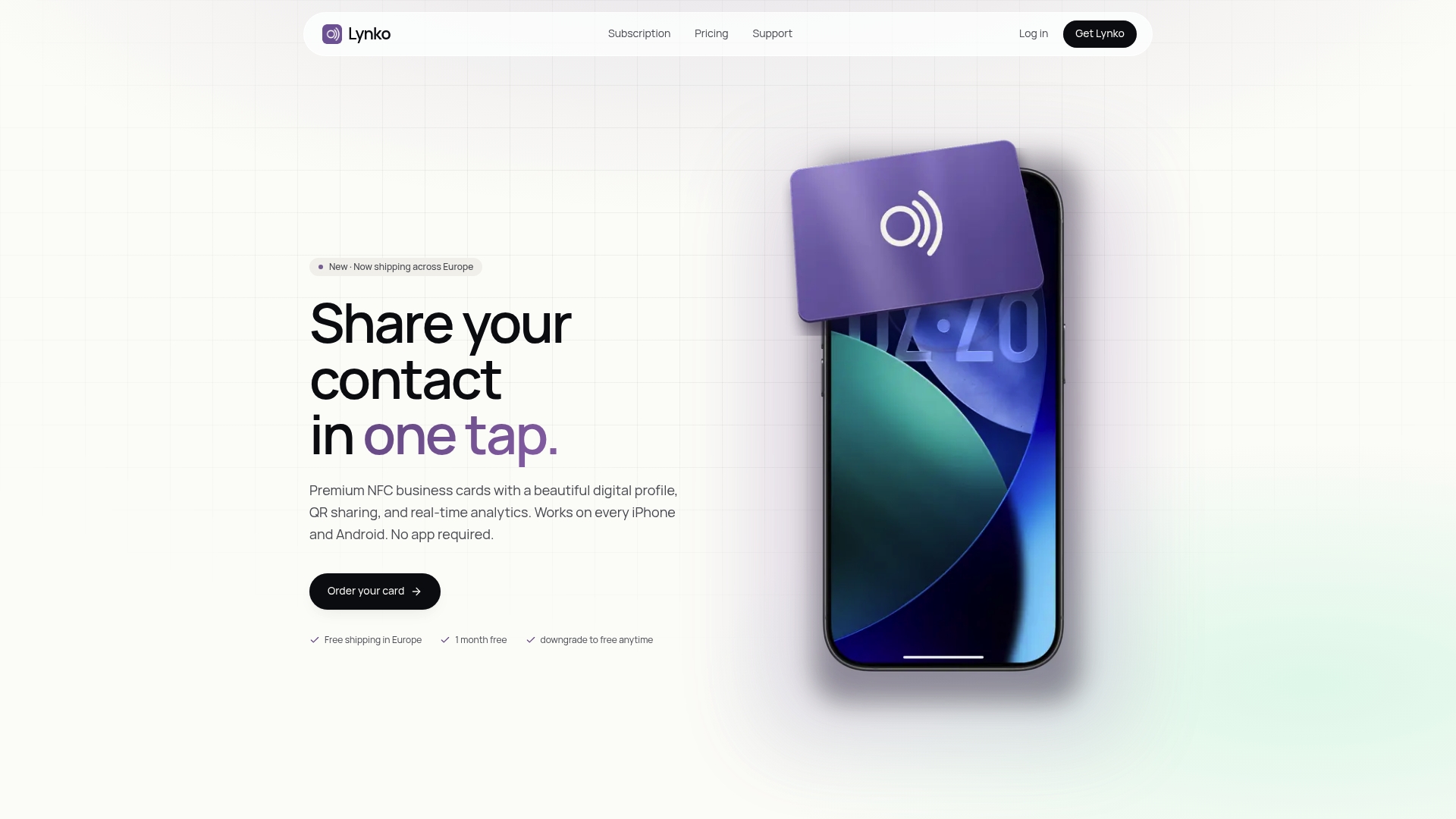
Each Lynko card taps to share a fully customisable digital profile, complete with your logo, brand colours, social links, and Google reviews. No app is needed on either side. The setup takes minutes, and the profile updates in real time, so every contact always sees your current details. Lynko's NFC business cards are GDPR-compliant and built around the kind of brand consistency that turns a single meeting into a lasting professional connection. Real-time analytics show you exactly how contacts engage with your profile after every exchange.
FAQ
What is the role of branding in contact exchange?
Branding in contact exchange transforms shared contact details into a trust signal by delivering a consistent identity across every touchpoint. Personal branding contributes 17.9% to business communication effectiveness, making it a measurable driver of networking success.
How does brand consistency affect networking results?
Consistent visual and tonal branding produces a 20–30% increase in brand recognition across contact touchpoints. That recognition reduces uncertainty for new contacts and makes you more likely to appear in peer referrals and shortlists.
Why does follow-up matter so much after contact exchange?
The strongest return from any contact exchange comes from personalised follow-up that references specific conversations and adds immediate value. Without a branded, timely follow-up, the trust built during the initial exchange rarely converts into a lasting relationship.
What branding elements should professionals prioritise for contact sharing?
The three most important elements are visual identity, digital profile quality, and communication tone. These must be consistent across your digital business card, social profiles, and follow-up communications to build reliable trust with new contacts.
How do NFC business cards support personal branding?
NFC business cards like those from Lynko share a fully branded digital profile in a single tap, with no app required. They support custom themes, unlimited social links, and real-time analytics, keeping every contact exchange on-brand and measurable.