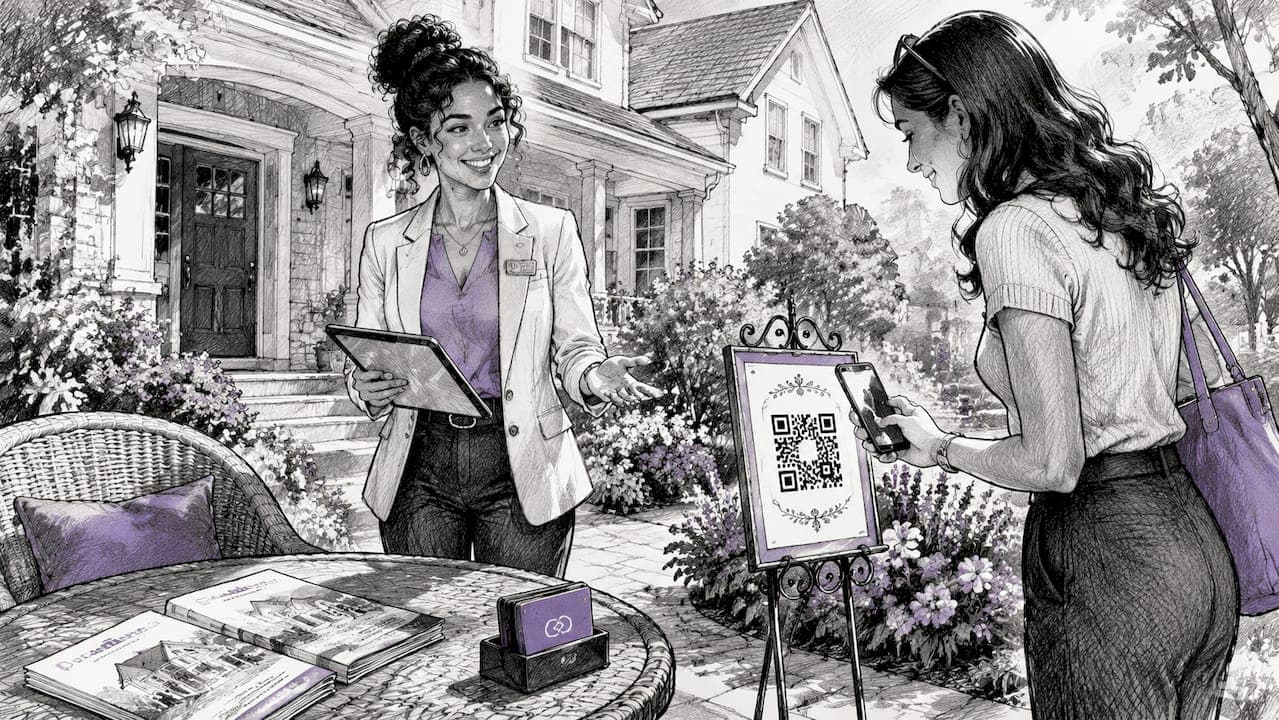
The best digital tools for open house networking are apps and platforms that capture visitor information, qualify leads with AI, enable fast contact sharing, and automate follow-up to convert attendees into clients. Paper sign-in sheets, printed business cards, and manual follow-up calls no longer match the pace of modern property sales. Agents who adopt digital contact sharing and AI-powered lead qualification consistently outperform those who rely on analogue methods. This guide covers the most effective tools available in 2026, from NFC cards to virtual tour platforms, and explains exactly how to deploy them.
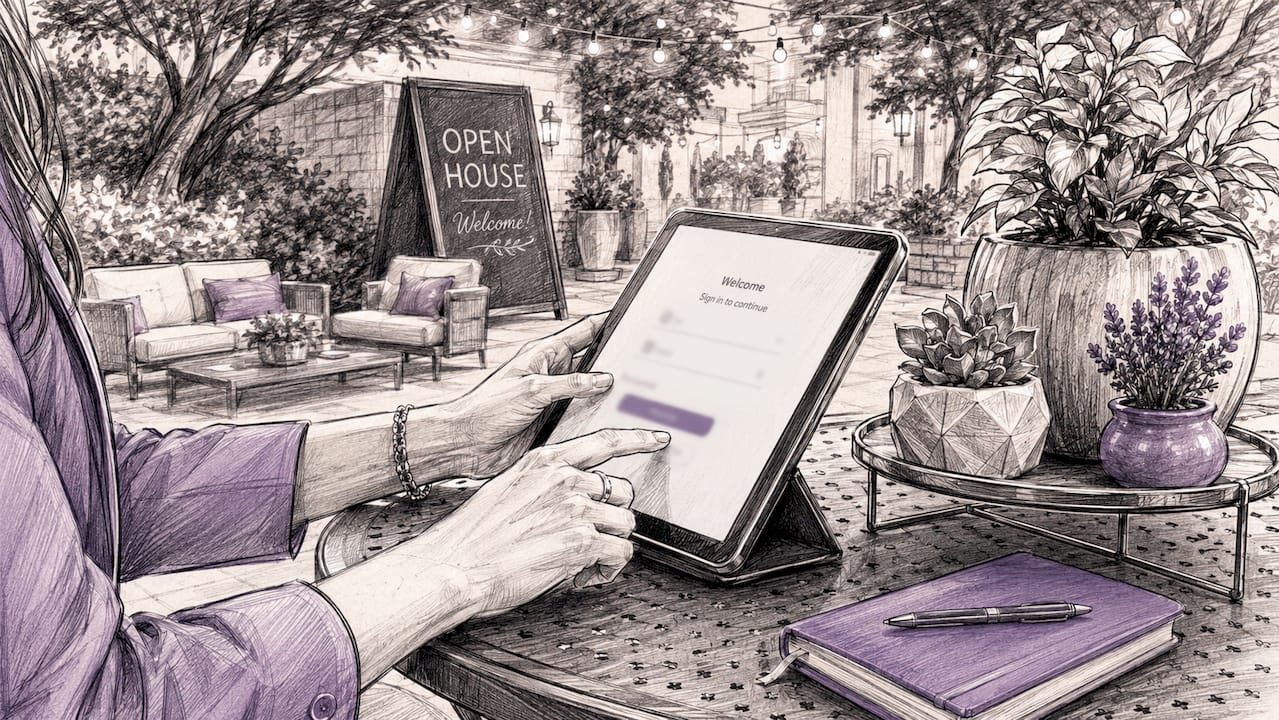
1. Digital sign-in tools for accurate visitor data capture
Paper sign-in sheets are the weakest link in open house lead generation. 40–50% of paper entries are fake or deliberately obfuscated, meaning nearly half your captured leads are worthless before follow-up even begins. Digital sign-in platforms solve this by verifying contact details in real time and pushing confirmed data directly into your CRM.
The best digital sign-in tools collect more than a name and phone number. They ask qualifying questions at the point of entry:
- Are you currently working with an agent?
- What is your buying timeline?
- Are you pre-approved for a mortgage?
- What price range are you considering?
These answers let you segment leads before the event ends. Tablets placed at the entrance work well, as do QR codes printed on a welcome card. Visitors scan the code on their own phone, which removes the friction of sharing a device.
Pro Tip: Keep a simple paper sheet as a backup. Around 5–10% of visitors resist digital capture due to privacy concerns or tech discomfort. A paper option ensures you lose no one.
2. NFC business cards and contact sharing for organic lead capture
NFC business cards are the most underused tool in real estate networking. When you tap an NFC card against a visitor's smartphone, your full digital profile opens instantly, no app required on their end. The visitor saves your contact details in one tap, and the interaction is logged to your agent dashboard automatically.
This bidirectional exchange is what separates NFC cards from printed alternatives. NFC cards log visitor info to agent dashboards instantly and save the agent's profile on visitor phones with a single tap. That means casual conversations in the kitchen or garden become captured leads, not lost opportunities.
Lynko's NFC business cards go further than basic contact sharing. Each card links to a customisable digital profile that can include:
- Unlimited social media links
- Google review prompts
- Property listings or work samples
- Scheduling links for follow-up appointments
- Contact saving with GDPR-compliant data handling
Pro Tip: Combine your Lynko NFC card with a printed QR code on your property brochure. Visitors who prefer scanning over tapping still reach your profile, giving you a hybrid capture strategy that covers every preference.
3. AI-powered lead qualification and follow-up automation
Raw visitor data is not a lead. It becomes one only after qualification and timely follow-up. AI tools now handle both steps faster than any human team can manage manually.
Here is how the process works in practice:
- Data ingestion. The AI pulls visitor responses from your digital sign-in tool and cross-references them with behavioural signals, such as time spent in each room or pages viewed on your property website.
- Lead scoring. Each visitor receives a score based on buying timeline, pre-approval status, and engagement level. Hot leads rise to the top automatically.
- Immediate outreach. Contacting leads within 1–2 hours after the event significantly increases engagement compared to next-day follow-up. AI systems trigger this outreach without manual input.
- Multi-channel sequences. Automated SMS and email sequences run over seven days, each message timed and personalised based on the visitor's score and stated preferences.
- Conversational qualification. AI virtual assistants handle initial replies, answering questions and booking viewings without agent involvement.
Speed is the single biggest variable in open house conversion. An automated system that contacts a lead within two hours will consistently outperform a manually managed follow-up sent the following morning.
4. Virtual open house tools and immersive digital tours
Virtual open house formats extend your reach far beyond the physical event. A buyer relocating from Edinburgh to London cannot attend your Saturday morning open house in person. A well-built virtual tour keeps them engaged and qualified.
The main formats available in 2026 are:
- Live streamed walkthroughs via video platforms, with a host answering questions in real time
- 360° interactive tours that visitors navigate at their own pace on any device
- 3D spatial tours with room-by-room measurement data and furniture placement tools
Virtual staging using AI can be completed in 30 seconds and produces MLS-ready images, compared to £200–£500 for a professional staging session. That cost difference makes virtual staging accessible for every listing, not just premium properties.
Buyers pre-exposed to staged images provide more accurate contact details and clearer follow-up preferences at sign-in. Emotional connection to a property, built through good visuals, translates directly into better lead quality.
| Virtual format | Best use case | Engagement level |
|---|---|---|
| Live stream walkthrough | Remote buyers, launch events | High, real-time interaction |
| 360° self-guided tour | Always-on discovery, out-of-area buyers | Medium, exploratory |
| 3D spatial tour | Premium listings, serious buyers | High, detail-oriented |
| AI-staged gallery | All listings, pre-visit interest building | Medium, visual engagement |
Spatial audio and open navigation in virtual platforms foster genuine conversations rather than passive viewing. This interaction style converts better than a one-way webinar format because visitors feel they are exploring, not being presented to.
5. QR codes for continuous lead capture beyond the event
QR codes turn every printed item in your property into a lead capture point. Place them on floor plans, price cards, feature sheets, and exterior signage. A visitor who picks up a brochure and scans it at home that evening enters your CRM automatically, even though the event ended hours ago.
Dynamic QR codes with real-time scan analytics let you monitor which materials generate the most interest. If your kitchen feature sheet gets three times more scans than your garden brochure, that tells you where buyer interest concentrates. You can then personalise follow-up around the features each visitor engaged with.
Placing QR codes on every marketing piece extends lead capture beyond the event, funnelling visitor interest into your CRM automatically. This turns a two-hour open house into an always-on lead generation asset.
6. Sign-in as a value exchange, not a data grab
Agents who treat sign-in as a value exchange increase capture rates from around 30% to 50–70%. The difference is what you offer in return for contact details. A mandatory sign-in sheet feels like a toll. A sign-in that unlocks a neighbourhood market report or a local school guide feels like a service.
Practical offers that increase sign-in rates include:
- A PDF market report for the local postcode, sent immediately by email
- A comparable sales summary for the street
- A first-look alert for similar properties coming to market
- A personalised mortgage estimate link
The offer does not need to be expensive. It needs to be relevant. A buyer attending an open house in Chiswick wants Chiswick data, not generic property advice.
Pro Tip: Frame your sign-in screen with the offer headline, not the data fields. "Get your free Chiswick market report" above the form converts far better than "Please sign in" with fields below.
7. Best practices for integrating all your tools into one system
Individual tools only deliver their full value when they share data with each other. A digital sign-in platform that does not connect to your CRM creates a manual transfer step that slows everything down.
The integration checklist for a high-performing open house system:
- CRM sync. Every sign-in, QR scan, and NFC tap feeds into one central contact record automatically.
- Lead scoring rules. Set your AI qualification criteria before the event, not after.
- Follow-up sequences pre-built. Draft your SMS and email sequences in advance so they trigger the moment a lead is captured.
- Analytics review. After each event, check scan data, sign-in rates, and lead scores to identify what worked.
- Consistent branding. Your NFC card profile, virtual tour landing page, and email signature should all carry the same visual identity and contact details.
Showcasing a consistent brand identity across every touchpoint builds trust before a single conversation takes place. Visitors who encounter the same professional presentation at the door, in the brochure, and in the follow-up email are more likely to respond.
Key takeaways
The most effective open house networking systems combine digital sign-in, NFC contact sharing, AI follow-up, and virtual tour tools into a single connected workflow.
| Point | Details |
|---|---|
| Replace paper sign-in sheets | Digital tools cut fake entries and push verified leads directly into your CRM. |
| Use NFC cards in conversation | A tap shares your full profile and logs the contact instantly to your dashboard. |
| Follow up within two hours | AI-triggered outreach within 1–2 hours post-event outperforms all other timings. |
| Treat sign-in as a value exchange | Offering a market report at sign-in raises capture rates from 30% to 50–70%. |
| Make every printed item a lead point | QR codes on brochures and price cards capture interest long after the event ends. |
Why most agents are still leaving leads on the table
The agents I see struggling with open house conversion are not short of visitors. They are short of systems. They run a busy two-hour event, collect a paper sheet with a dozen names, and then spend Tuesday morning trying to remember who was genuinely interested and who just wanted to see the kitchen.
What strikes me most is how simple the fix actually is. An NFC card costs less than a round of coffees and eliminates the awkward "let me take your number" moment entirely. A digital sign-in tablet with three qualifying questions tells you more about a visitor's intent in 90 seconds than a 20-minute conversation. Yet adoption remains patchy, largely because agents underestimate how much a single missed follow-up costs them.
The trend I find genuinely exciting is the always-on open house. When every brochure, every floor plan, and every exterior board carries a QR code linked to a live profile, the event does not end at 1PM on Saturday. It continues for days. I have spoken with agents who received qualified sign-ins 48 hours after an event closed, simply because a visitor picked up a flyer and scanned it at home.
The future of open house networking is not about replacing human connection. It is about removing every friction point that stops a genuine connection from becoming a captured lead. The agents who understand that will consistently outperform those who treat digital tools as optional extras.
— Olivier
Lynko NFC cards for real estate professionals
Real estate agents who want to capture every open house lead without disrupting natural conversation should look at Lynko's NFC business cards.
A single tap shares your full digital profile to any smartphone, no app needed on the visitor's side. Your profile can include property listings, scheduling links, Google review prompts, and unlimited social links, all updated in real time. Every tap is logged to your dashboard, so you know exactly who engaged and when. Lynko cards are GDPR-compliant and built for UK professionals who need a professional networking card that works as hard as they do. Set up takes minutes, and your profile stays current without reprinting a single card.
FAQ
What are the best digital tools for open house networking?
The most effective tools combine digital sign-in platforms, NFC business cards, AI lead scoring, QR codes, and virtual tour software into one connected system. Each tool addresses a different stage of the visitor journey, from arrival to post-event follow-up.
How do NFC business cards work at open houses?
An NFC business card shares your digital profile when tapped against any smartphone, with no app required. The contact is saved on the visitor's phone and logged to your agent dashboard instantly.
How quickly should I follow up with open house leads?
Contacting leads within 1–2 hours after an event significantly increases engagement compared to next-day outreach. Automated AI sequences make this timing achievable without manual effort.
Do virtual open house tools replace physical events?
Virtual tours complement physical events rather than replace them. They extend reach to remote buyers and keep the property discoverable long after the physical event ends.
How do I reduce fake entries on sign-in sheets?
Switch to a digital sign-in tool with real-time contact verification. Paper sign-in sheets produce 40–50% fake or obfuscated entries, while digital tools with CRM integration verify details at the point of capture.