
How entrepreneurs use NFC cards to grow their businesses
NFC cards give entrepreneurs a physical object that does the work of a dozen digital tools. Tap one to a smartphone and you can share contact details, trigger a loyalty reward, log an employee's entry, or authenticate a product, all without an app, a QR code, or a moment of friction. For UK small business owners navigating tighter budgets and higher customer expectations in 2026, that simplicity is genuinely useful.
The most valuable NFC card use cases for entrepreneurs cluster into five areas:
- Networking: digital business cards that share your full profile, social links, and Google review page with a single tap
- Customer engagement: interactive promotions, feedback collection, and loyalty schemes triggered by tapping a card or tag
- Operations: access control, employee attendance logging, and asset tracking without barcode scanners or paper logs
- Marketing: campaign trigger points on physical products, packaging, and shelf displays that link directly to social media or promotional content
- Events: fast check-in, ticket validation, and Wi-Fi access via tap, cutting queue times and improving guest flow
Security sits underneath all of these. NFC operates at a range of roughly 4 centimetres, which makes passive eavesdropping far harder than with Bluetooth or Wi-Fi. GDPR compliance is a separate consideration: any card that collects or stores personal data needs a clear privacy policy and explicit consent, particularly for loyalty and feedback applications in the UK.
1. Digital business cards for effortless networking
Paper cards get lost, go out of date, and end up in a drawer. An NFC business card replaces the whole stack with one card that updates in real time. Tap it to any modern smartphone and your contact details, website, LinkedIn profile, and portfolio appear instantly, no app required.
Lynko's NFC cards go further than basic contact sharing. They include unlimited social links, a Google reviews module, and real-time analytics so you can see exactly how many people tapped your card and what they clicked. The cards are GDPR compliant and built around customisable digital profiles, which means your information stays current even after the physical card has been handed out.
Pro Tip: Set your NFC card's primary link to a landing page rather than a single social profile. That way you control the first impression and can update the destination without reprinting anything.
For entrepreneurs who attend trade shows, pitch events, or client meetings regularly, the networking efficiency gain is real. You hand over one card and the recipient has everything they need, saved directly to their phone.
2. Customer loyalty schemes and membership cards
Plastic punch cards are fiddly and easy to lose. NFC-enabled loyalty cards link directly to a customer's profile in your system, so a tap at the till records a visit, adds points, or unlocks a reward without any manual input. Gyms, independent cafés, and beauty salons across the UK have adopted this approach because it removes the friction that kills loyalty programme participation.
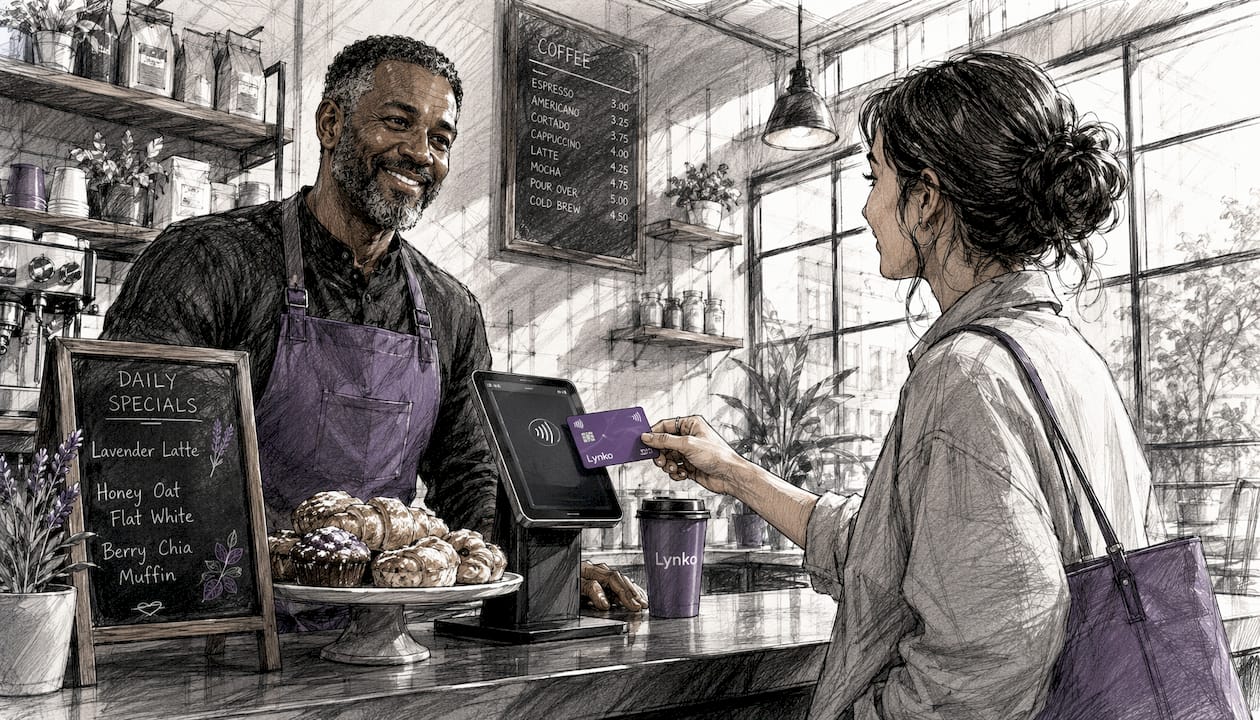
The same card can double as a membership credential. A tap at the door grants access; a tap at the counter triggers a member discount. No separate app, no login screen.
3. Interactive marketing campaigns on physical products
NFC marketing campaigns turn ordinary objects into digital touchpoints. Attach a tag to a poster, a product label, or a shelf display and customers tap to access a promotion, watch a video, or sign up for an offer. Retail brands use NFC stickers on product shelves to deliver style tips and exclusive deals directly to shoppers' phones, with no QR code required.

The advantage over QR codes is subtle but meaningful. NFC requires no camera app, no framing, and no lighting adjustment. The tap is faster and the experience feels more considered, which matters when you are trying to make a brand impression at the same time.
4. Product authentication and anti-counterfeiting
Luxury goods, premium food and drink producers, and independent fashion labels all face the same problem: counterfeits erode trust. NFC-enabled authentication embeds a tag in packaging or a label that customers or inspectors tap to verify origin, materials, and production details. The tag can confirm whether the product has been tampered with and provide full traceability back to the factory.
For a small UK brand competing against cheaper imitations, this kind of verifiable provenance is a genuine differentiator. STMicroelectronics' NDEF-based tags, for instance, can store traceability data, ingredient information, and authenticity signatures that work entirely offline, no network connection needed at the point of scan.
5. Employee access control and attendance tracking
NFC staff ID cards replace key fobs and paper sign-in sheets with a single tap. When an employee holds their card near a reader at the entrance, a digital timesheet auto-populates with their name, the time, and the location. The same system tracks meeting attendance and training participation without any manual data entry.
For businesses operating across multiple sites, this creates a real-time record of who is where, accessible from a central dashboard. It also removes the security risk of lost keys: deactivating a card takes seconds, with no locksmith required.
6. Asset tracking and inventory management
Businesses use NFC for asset tracking by attaching tags to equipment, tools, and stock. A worker taps their phone to a tagged item and the asset's serial number, location, and service history auto-populate on a digital form. That record feeds directly into a central database, giving managers a live view of every asset across every site.
The operational gain over barcode scanning is speed and context. A tap takes less than a second and can trigger a full workflow: a safety checklist before operating machinery, a service request when a fault is spotted, or a check-out form when a tool leaves the site. Paper logs cannot do any of that reliably.
7. Event check-in, ticketing, and Wi-Fi access
NFC speeds up event entry by replacing printed tickets and manual guest lists with a tap. Attendees hold their card or wristband to a reader and they are in, with the check-in logged automatically. For conferences, pop-up markets, and private members' events, this cuts queues and gives organisers accurate attendance data in real time.
The same mechanism works for Wi-Fi access. Place an NFC tag at the reception desk or on a table card and guests tap to connect instantly, no password required. It is a small touch, but it removes a surprisingly common source of friction in hospitality and co-working settings.
8. Customer feedback and Google reviews
Collecting reviews is one of the most consistently neglected tasks in small business marketing, usually because asking feels awkward and the process is too slow. An NFC card or table tag that links directly to your Google review page removes both problems. The customer taps, the review page opens, and the ask is built into the physical environment rather than a follow-up email.
Lynko's cards include a Google reviews module as a standard feature, which means the link is always current and tracked. Entrepreneurs using this approach report that the tap-to-review mechanic works particularly well at the end of a service interaction, when satisfaction is highest.
9. Sharing portfolios and work samples
For creative entrepreneurs, consultants, and freelancers, the ability to share work samples via a tap is a genuine conversation-changer. Rather than fumbling with a phone to find a portfolio link, you hand over your card and the recipient sees your best work immediately. The card can point to a curated landing page, a Behance profile, a showreel, or a case study, updated whenever you have new work to show.
This use case is particularly strong for entrepreneurs who pitch in person. The physical card creates a moment of engagement; the digital destination does the selling.
10. Smart packaging and interactive product experiences
NFC's role in packaging goes beyond authentication. Entrepreneur Ozkan Oz, founder of SOFTECH TEXAS LLC, has built products like Korble Smart Greeting Cards and Coniax Smart Photo Albums that use NFC to add a digital layer to physical objects, turning a greetings card into a video message or a photo album into a living record. His work, which spans patents filed across 52 countries, points to where smart packaging is heading for consumer brands.
For UK entrepreneurs in food, cosmetics, or gifting, this means packaging that links to recipe videos, sustainability credentials, or personalised messages. The physical product becomes a channel, not just a container.
11. SoftPOS payments without extra hardware
SoftPOS technology, also called Tap-on-Mobile, lets merchants turn a standard Android smartphone into a contactless payment terminal. No card reader, no additional device, no monthly hardware rental. A customer taps their card or phone to the merchant's handset and the payment goes through.
For market traders, mobile service providers, and pop-up businesses across the UK, this removes one of the most persistent barriers to accepting card payments. The NFC Forum describes SoftPOS as a significant disruptor to the traditional payment terminal ecosystem, and uptake among small merchants has grown steadily as the software has matured.
12. Digital forms and compliance workflows in field operations
NFC tags linked to digital forms create audit trails that paper logs simply cannot match. When a field worker taps a tagged asset, the form auto-populates with the asset's ID, location, and service history. That data feeds into a cloud database in real time, giving managers compliance records that are timestamped, geolocated, and searchable.
NFC-triggered workflows are particularly valuable in regulated industries: healthcare equipment management, food safety checks, and construction site inspections all benefit from records that cannot be backdated or lost. For a small business owner managing a field team, the reduction in paperwork alone justifies the setup cost.
Emerging NFC innovations worth watching in 2026
The applications above are proven. What is coming next is more ambitious.
| Innovation | What it does | Who benefits |
|---|---|---|
| SoftPOS / Tap-on-Mobile | Turns any NFC smartphone into a payment terminal | Market traders, mobile services, pop-ups |
| Smart packaging | Embeds NFC in product packaging for video, traceability, or personalisation | Food, cosmetics, gifting brands |
| IoT integration | NFC tags trigger connected devices and smart city infrastructure | Property, logistics, healthcare |
| Interactive greeting cards | Physical cards that play video or audio via NFC tap | Creative entrepreneurs, event businesses |
| Digital form automation | Tags auto-populate compliance forms in real time | Field services, construction, healthcare |
The NFC and IoT convergence is the one to watch most closely. As NFC becomes embedded in smart city infrastructure and connected devices, the gap between a physical tap and a fully automated business workflow narrows to almost nothing. UK entrepreneurs who build NFC into their operations now will find the transition to IoT-connected processes considerably easier.
Pro Tip: Before investing in NFC hardware, map one specific friction point in your customer journey or operations. The strongest NFC implementations solve a single, concrete problem rather than trying to do everything at once. Start with that, prove the value, then expand.
For entrepreneurs exploring whether NFC fits their product or service model, tools like Spark Concept's idea checker can help stress-test a concept before committing to development costs.
Ready to tap into NFC for your business?
Lynko's NFC business cards are built specifically for UK entrepreneurs who want to make every in-person interaction count. Each card shares your full digital profile, social links, Google reviews page, and portfolio with a single tap, no app required, and no reprinting when your details change. Real-time analytics show you exactly who engaged and when, and every card is GDPR compliant from day one.
Get your Lynko NFC card and turn your next handshake into a lasting digital connection.
Key takeaways
NFC cards give UK entrepreneurs a single physical tool that handles networking, customer engagement, operations, and marketing through a tap that takes less than a second.
| Point | Details |
|---|---|
| Networking efficiency | NFC business cards share your full digital profile instantly, with no app needed on either side. |
| Customer engagement | Loyalty schemes, feedback collection, and promotions all work via a tap, removing the friction that kills participation. |
| Operational control | Access control, attendance logging, and asset tracking replace paper logs with real-time digital records. |
| Marketing reach | NFC tags on products and displays link customers to content, offers, and social media without QR codes. |
| Security and compliance | NFC's short range limits eavesdropping, and GDPR-compliant platforms like Lynko handle data privacy by design. |
Why most entrepreneurs are still thinking about NFC too narrowly
The conversation about NFC for small businesses tends to stop at digital business cards. That is understandable: the networking use case is the most visible and the easiest to explain. But it sells the technology short by a considerable margin.
The entrepreneurs getting the most from NFC are the ones who have noticed that it solves a class of problem, not just a single task. The class is this: any moment where a physical object needs to trigger a digital action. That covers a lot of ground. A product on a shelf. A piece of equipment in a warehouse. A door at the start of a shift. A table in a café. A greetings card. Each of these is a potential tap point, and each tap can do something genuinely useful rather than just opening a contact card.
What Ozkan Oz's work with smart packaging and interactive greeting cards demonstrates is that NFC's emotional register can be as powerful as its operational one. A card that plays a video message is not just a novelty; it creates a memory. For entrepreneurs in gifting, hospitality, or any business where the experience is the product, that matters.
The practical advice I would give any UK entrepreneur in 2026 is to resist the urge to deploy NFC everywhere at once. Pick the single interaction in your business where friction costs you the most, whether that is collecting reviews, logging attendance, or sharing your portfolio at a pitch, and build from there. The technology is mature enough that setup is straightforward. The harder work is identifying where it will actually change something.
Lynko's approach, building GDPR compliance and real-time analytics into the card itself rather than bolting them on later, reflects a sensible view of where the market is heading. Data privacy is not going to become less important for UK businesses, and entrepreneurs who treat it as a design constraint rather than an afterthought will find themselves ahead.