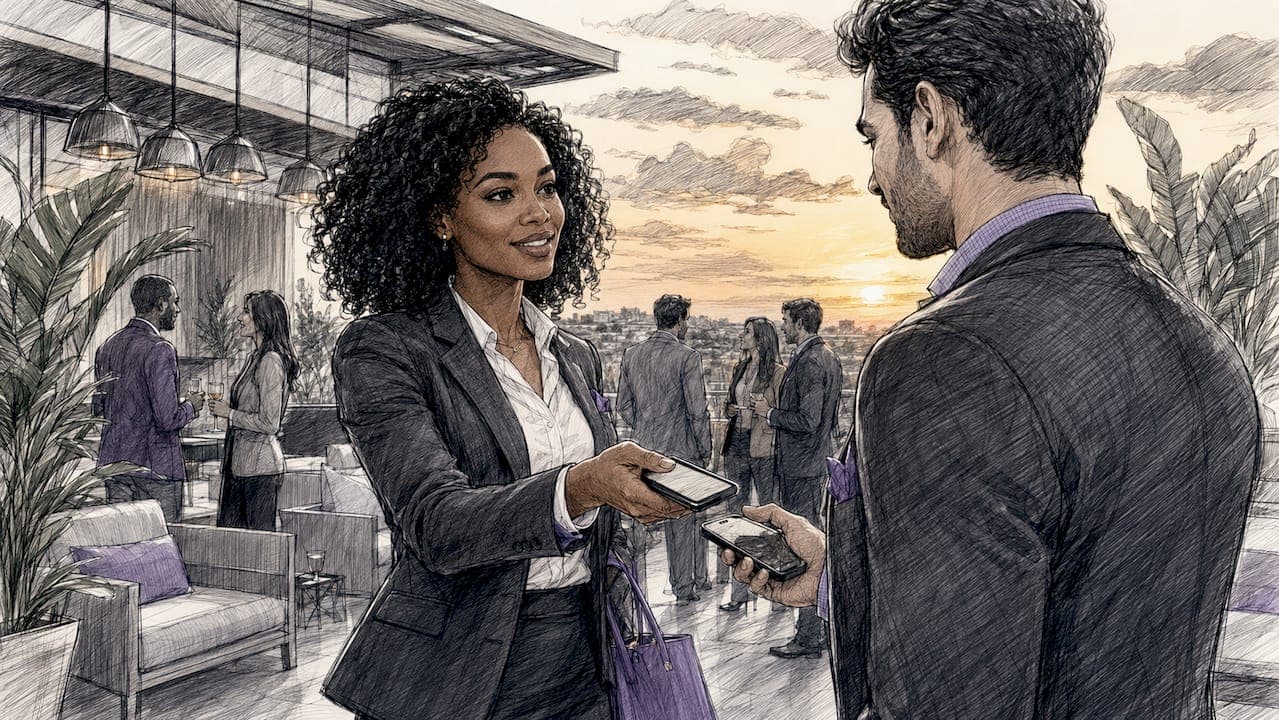
Collecting contacts at business events is a strategic process that combines targeted preparation, efficient technology, and personalised follow-up to maximise networking outcomes. The professionals who build the strongest contact lists do not work the room randomly. They arrive with a plan, use digital tools to capture data in seconds, and follow up before the event ends. Pre-event research and scheduling account for 80% of networking results, which means the work you do in the 48 hours before an event shapes almost everything that follows. This guide covers every stage of that process, from the tools you need to the follow-up messages that convert contacts into real relationships.
What tools do you need to collect contacts at business events?
The right tools separate professionals who leave with a pipeline from those who leave with a pocket full of cards they will never act on. Before you arrive, your setup should cover three areas: capture, storage, and sharing.
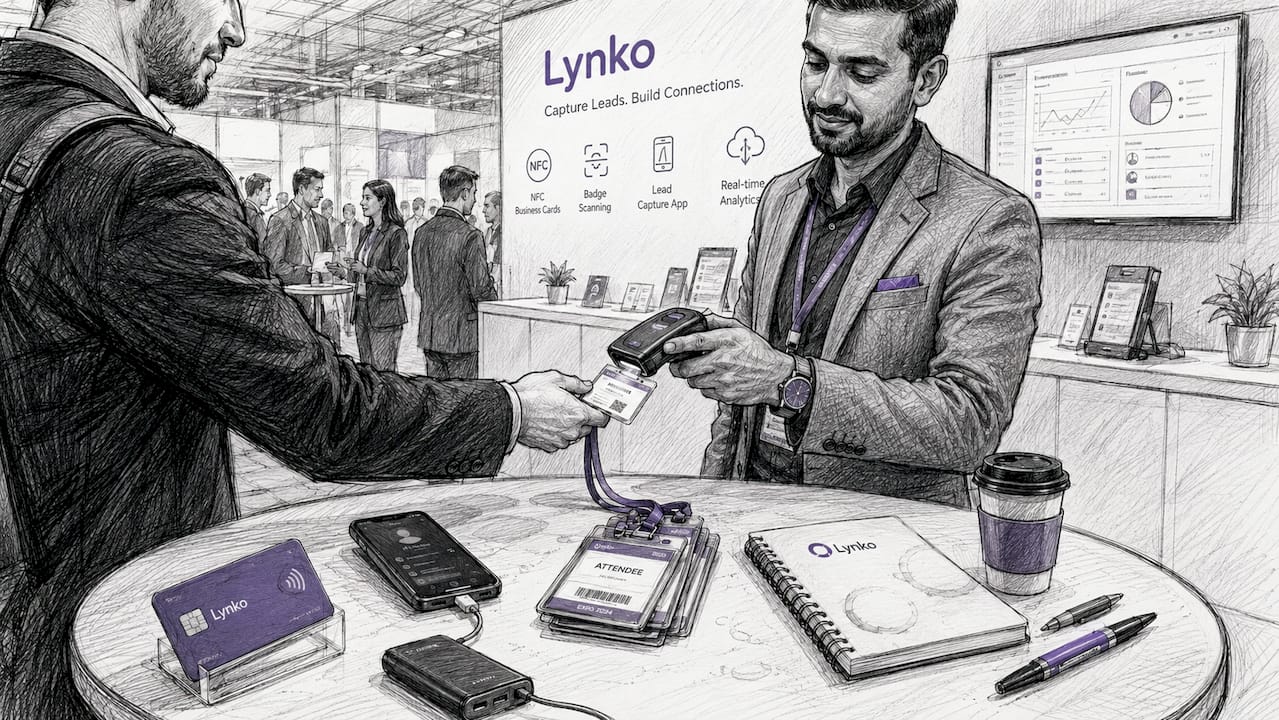
Digital capture tools are the foundation. Lead capture apps with badge scanning and business card OCR (optical character recognition) extract attendee data in under 2 seconds, reducing manual errors significantly. That speed matters because every second you spend typing a name is a second you are not building rapport. Apps that sync directly to a CRM, such as Salesforce or HubSpot, remove the manual transfer step entirely and create CRM-ready records from the moment of capture.
Your device setup is equally critical. Arrive with a fully charged phone, a portable battery pack, and your preferred note-taking app open and ready. QR codes linked to your digital profile let contacts pull your details without any friction on their side. Lynko's NFC business cards take this further: a single tap shares your full digital profile to any smartphone, with no app required on the recipient's device. That removes the single biggest barrier to instant contact exchange.
Pre-event research is the third pillar. Study the attendee list, identify your top targets, and schedule at least two conversations in advance. The 3-2-1 networking rule gives you a practical framework: aim to meet 3 individuals, prepare 2 questions for each, and schedule 1 follow-up before the event ends. This approach keeps your energy focused and your contacts meaningful.
| Capture method | Best use case | Key limitation |
|---|---|---|
| Badge scanner app | Large conferences with printed badges | Requires event organiser integration |
| Business card OCR | Small events, informal networking | Accuracy drops with non-standard card designs |
| QR code profile | Any setting, self-serve sharing | Requires the contact to scan actively |
| NFC business card | One-to-one professional introductions | Recipient needs an NFC-enabled phone |
| Manual entry | Backup only | Slow, error-prone, not CRM-ready |
How to collect contacts during the event efficiently
Speed and quality are not opposites when you have the right process. The goal is to capture a contact fully and accurately in under two minutes, then move on without losing the thread of the conversation.
- Open your capture app before approaching. Have it ready so you are not fumbling with your phone mid-introduction.
- Scan the badge or card immediately. Badge scanners capture full attendee data in under 2 seconds. Do this at the start of the conversation, not the end, so the data is already logged if you get interrupted.
- Add a voice or text note within 30 seconds. Record one specific detail: what they are working on, a problem they mentioned, or a mutual connection. Generic notes produce generic follow-ups.
- Assign a lead score on the spot. Rate the contact as hot, warm, or cold based on fit and interest. Apps that support qualification and scoring create CRM-ready leads that improve pipeline accuracy later.
- Share your own details via NFC or QR. Do not wait for them to ask. Tap your Lynko card to their phone or show your QR code. The exchange should take under five seconds.
- Trigger a follow-up action before you walk away. Set a reminder or, if the app supports it, trigger an automated email to send within the hour.
Pro Tip: Arrange your booth or table so contacts naturally face you rather than the crowd. A slight physical barrier, such as a high table, creates a pocket of focus that makes conversations feel more private and productive.
For professionals showcasing their brand identity at events, the physical setup of your space signals professionalism before you say a word. Digital collateral displayed on a tablet or screen gives contacts something to engage with while you finish another conversation, effectively running a self-serve capture loop in parallel.
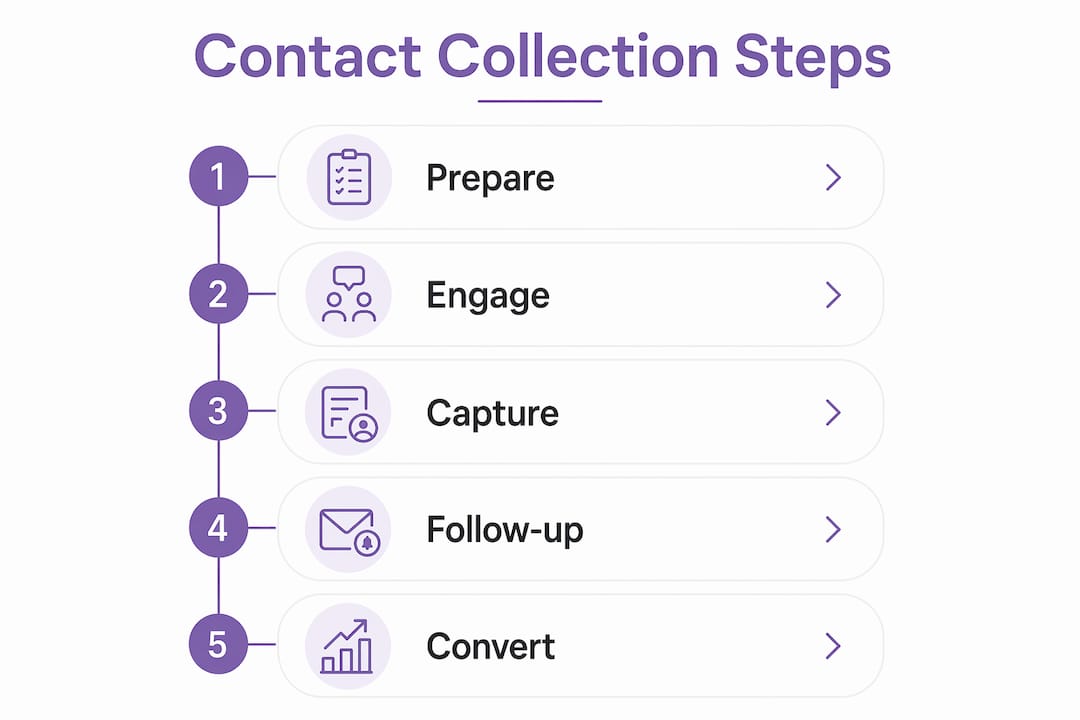
What post-event actions turn contacts into real connections?
Follow-up is where most professionals lose the value they spent all day building. Reaching out within 5 minutes of an initial interaction can increase conversion rates by up to 8 times. That number makes the case for triggering at least a brief message before you leave the venue.
Effective post-event follow-up has three characteristics:
- Speed. Send the first message within 5 minutes to 48 hours. The longer you wait, the more context fades for both parties.
- Specificity. Reference something from the conversation. "You mentioned you were evaluating new CRM options" is far more compelling than "Great to meet you." Your in-event notes make this possible.
- A concrete next step. Context-specific calls to action convert far better than vague invitations. "Are you free for a 20-minute call on Thursday at 2PM?" outperforms "Let's grab coffee sometime" every time.
Pro Tip: Write your follow-up message template before the event. Leave one blank field for the personalised detail you captured in your note. This cuts your follow-up time to under 90 seconds per contact and keeps the tone consistent.
Automated email or SMS sequences, triggered by your CRM the moment a contact is synced, maintain momentum without requiring you to manually send dozens of messages. The key is that the automation uses the contextual data you captured, not a generic script. A message that references the event, the conversation topic, and a specific next step feels personal even when it is partly automated. Personalised follow-up that secures a concrete commitment before you leave the event is the single most reliable predictor of whether a contact converts into a relationship.
How to avoid common mistakes when gathering business contacts
The most common failure mode at events is not a lack of contacts. It is a pile of cards, a vague memory, and no follow-up plan.
Manual data entry and paper-based collection are the leading causes of lost leads at events. Data fragmentation and entry errors break the chain between a promising conversation and a CRM record. The fix is simple: use an integrated app from the first interaction, not as a backup after the fact.
"A simple, intentional networking approach is more effective than collecting a mass of business cards. Quality connections foster referrals, while a stack of cards without context produces nothing."
Venue Wi-Fi is unreliable at most large events. Offline-capable apps store data encrypted locally and sync automatically once you reconnect. Never rely on a cloud-only tool at a conference centre.
Networking fatigue is a real and underestimated risk. The 3-2-1 rule works precisely because it moves you from "work the room" to surgical precision. Three meaningful conversations with full notes beat thirty shallow exchanges with no follow-up data.
| Common problem | Root cause | Practical fix |
|---|---|---|
| Lost leads after the event | Paper cards, no notes | Use a badge scanner or OCR app from the first contact |
| Generic follow-ups ignored | No contextual notes captured | Add a specific detail within 30 seconds of each conversation |
| App fails without Wi-Fi | Cloud-only capture tool | Switch to an offline-capable app before the event |
| Exhaustion and shallow contacts | No plan, working the room | Apply the 3-2-1 rule: 3 people, 2 questions, 1 follow-up |
| Contacts not CRM-ready | Manual transfer after the event | Use an app with direct CRM sync and lead scoring |
For a broader view of digital contact sharing tools and how they fit into a modern networking workflow, the options available in 2026 are significantly more capable than even two years ago.
Key takeaways
The most effective way to collect contacts at business events combines pre-event research, real-time digital capture, and personalised follow-up within 48 hours.
| Point | Details |
|---|---|
| Prepare before you arrive | Pre-event research and scheduled meetings drive 80% of networking results. |
| Use digital capture tools | Badge scanners and OCR apps capture full contact data in under 2 seconds, eliminating manual errors. |
| Score and note on the spot | Adding context and a lead score at the moment of capture makes every follow-up more targeted. |
| Follow up fast and specifically | Reaching out within 5 minutes can increase conversion rates by up to 8 times. |
| Prioritise quality over volume | Three meaningful contacts with full notes outperform thirty shallow exchanges every time. |
Why preparation beats personality every time
I have attended more industry events than I can count, and the pattern is always the same. The professionals who leave with the strongest contacts are not the most extroverted people in the room. They are the most prepared.
The shift that changed my own approach was treating networking at events as a research task, not a social one. I started arriving with a shortlist of five people I genuinely wanted to meet, two specific questions for each, and a follow-up message already drafted on my phone. That preparation meant I was never scrambling for something to say, and I never left a conversation without a clear next step logged.
Technology is an enabler, not a substitute for genuine interest. An NFC card or a badge scanner gets the data captured cleanly. But the note you add in the 30 seconds after the conversation, the one that says "building a new sales team, interested in CRM integration," is what makes the follow-up land. Without that, you have a name and an email address. With it, you have the start of a real relationship.
The uncomfortable truth about building a contact list at events is that most people collect far too many contacts and follow up with almost none of them. The contactless business card has made sharing details faster, but speed without intent still produces a dead list. Pick fewer people. Go deeper. Follow up the same day. That discipline, more than any tool, is what separates a pipeline from a pile of data.
— Olivier
How Lynko makes contact exchange faster at events
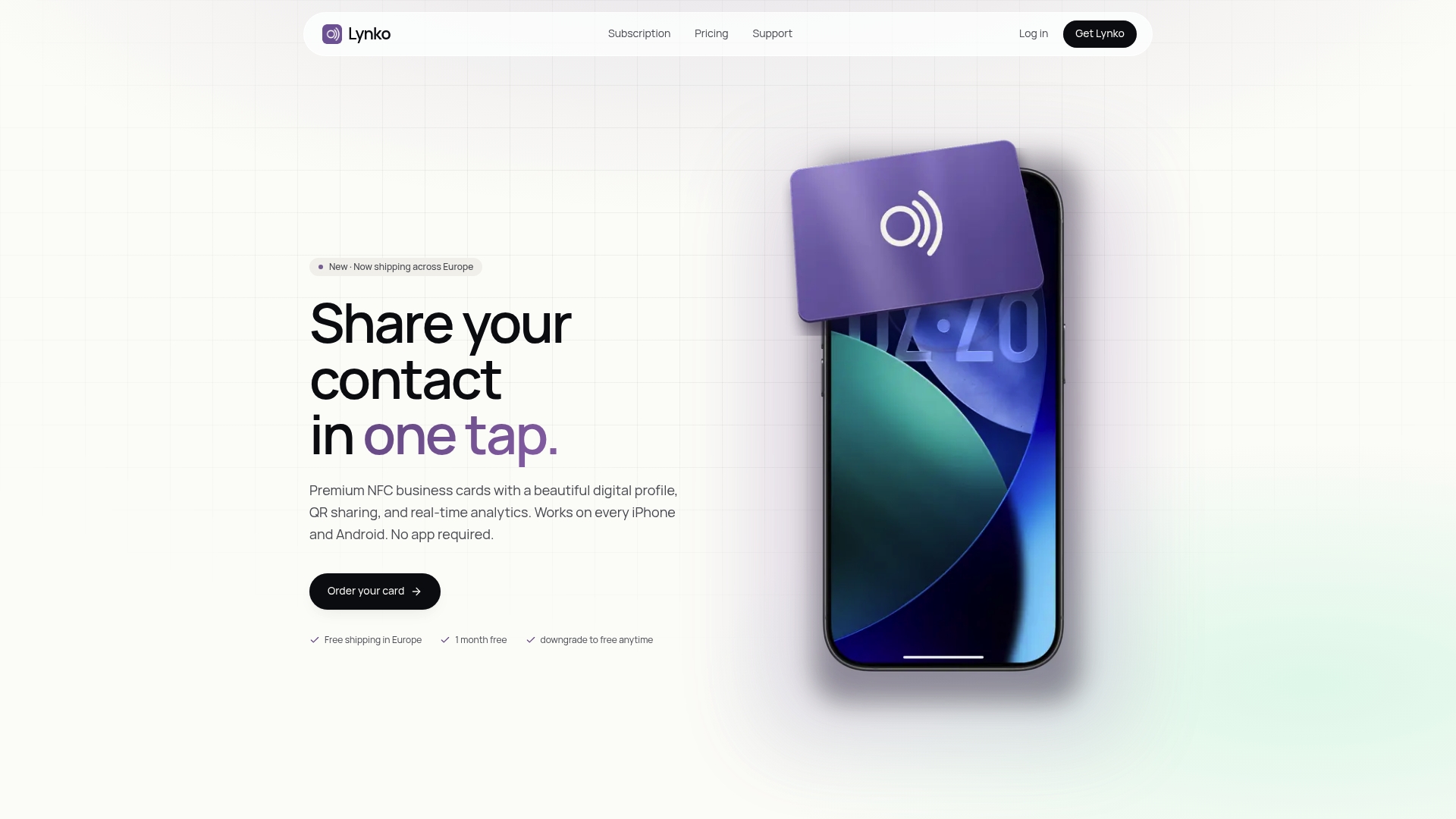
Lynko's NFC business cards are built for exactly the kind of fast, professional contact exchange that events demand. A single tap shares your full digital profile to any smartphone, with no app required on the recipient's side. Your profile includes unlimited social links, a contact-saving button, and branded modules you control in real time. When your details change, every card you have ever shared updates automatically. Lynko is fully GDPR-compliant, which matters when you are collecting and sharing contact data at scale. If you are ready to replace paper cards with something that works as fast as a conversation, Lynko's NFC business cards are the place to start. A digital business card subscription starts from £3.99 per month.
FAQ
What is the fastest way to collect contacts at an event?
Badge scanning apps and NFC business cards capture full contact data in under 2 seconds. Pairing these with a CRM-connected app removes manual transfer entirely.
How soon should you follow up after meeting someone at a business event?
Follow up within 5 minutes to 48 hours. Reaching out within 5 minutes of an initial interaction can increase conversion rates by up to 8 times.
What is the 3-2-1 networking rule?
The 3-2-1 rule advises meeting 3 people, preparing 2 questions for each, and scheduling 1 follow-up before the event ends. It maximises quality contacts while preventing exhaustion.
What should you do if the venue has no Wi-Fi?
Use an offline-capable lead capture app. These tools store data encrypted on your device and sync automatically once you reconnect to a network.
How do you make a follow-up message stand out?
Reference a specific detail from your conversation and include a concrete next step, such as a proposed call time. Context-specific requests convert far better than generic invitations.